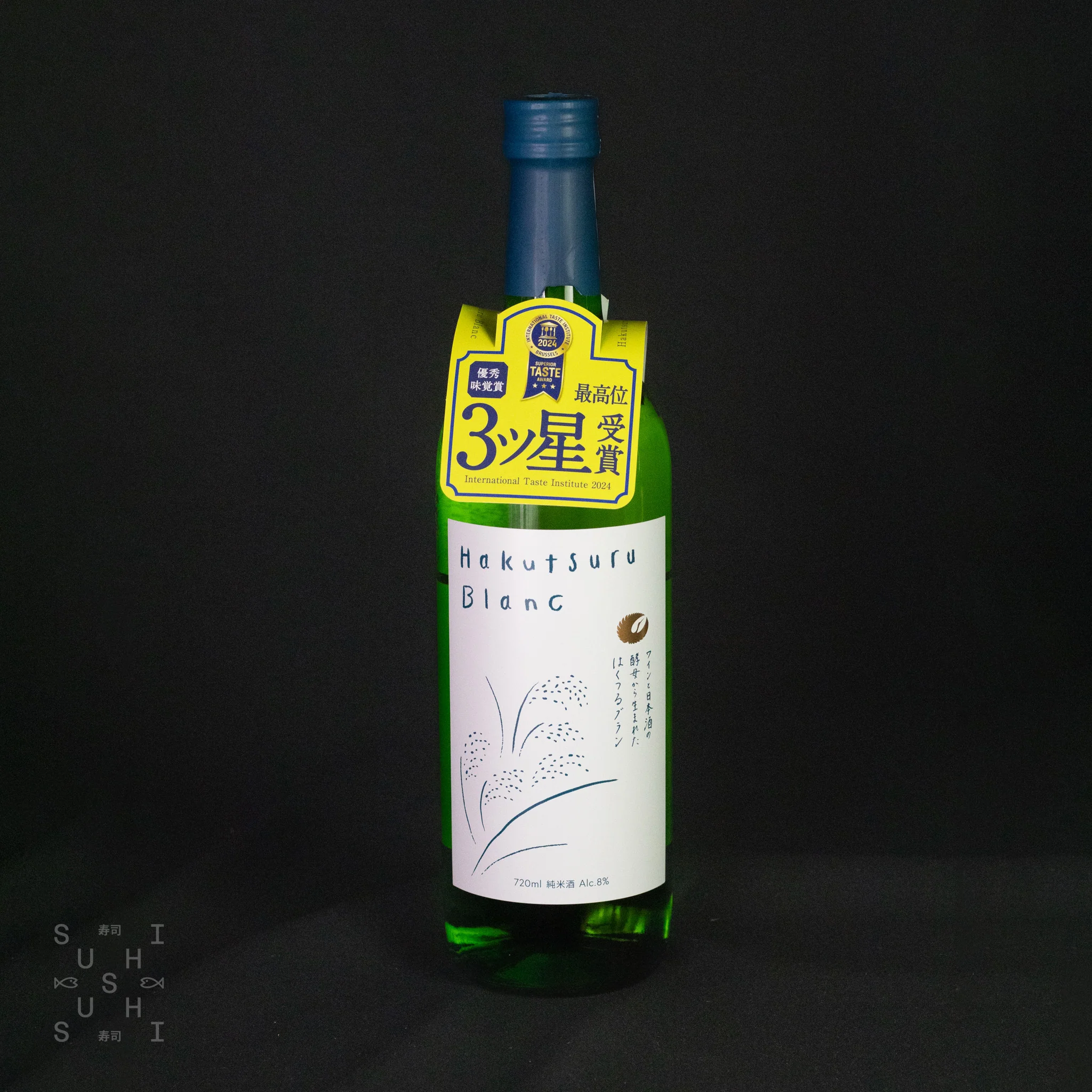
Hakutsuru, Blanc Wine Yeast Sake, 720ml
A Sake for Wine Drinkers, Fermented with Wine Yeast
Sake and white wine, brought closer together. Hakutsuru Blanc is brewed not with traditional sake yeast but with wine yeast, which gives it a noticeably white-wine character: fruity and floral aromatics, a crisp, fresh acidity, and a light, easy body at a gentle 8%. The result drinks more like a fragrant white wine than a classic sake, served well chilled in a wine glass, the ideal bridge bottle for wine lovers curious about sake, and for the table.
Why You'll Reach For It
- Fermented with wine yeast: gives white-wine-style fruity, floral aromatics not found in standard sake
- Crisp and fresh: a brighter acidity and lighter body than classic sake, closer to a dry white wine
- Lower in alcohol: an easy 8%, more like a wine than a typical 15% sake
- A perfect bridge: the bottle to put in front of wine drinkers discovering sake
How to Serve
- Well chilled: serve cold, as you would a crisp white wine
- In a wine glass: a tulip glass shows off the fruity, floral aromatics
- As an aperitif: light and fresh enough to open a meal
- With food: pair as you would a dry white, with fish, shellfish and lighter dishes
What is wine-yeast sake?
Sake's character is shaped enormously by its yeast. Most sake is brewed with strains of sake yeast developed over generations to produce its familiar flavour. Wine-yeast sake takes a different path, fermenting the rice with yeast normally used for wine, which produces a very different set of aromas and a higher, fresher acidity. The effect is a sake that leans towards white wine: more overtly fruity and floral, crisper and lighter, and usually lower in alcohol. It is a modern style designed to appeal to wine drinkers and to sit comfortably at a wine-led table, while still being made from rice in a sake brewery, here Hakutsuru, brewing in Nada, Kobe since 1743.
Product Details
| Type | Sake, fermented with wine yeast (white-wine style) |
| Brand | Hakutsuru (白鶴), founded 1743 |
| ABV | 8% |
| Character | Fruity, floral, crisp and fresh |
| Volume | 720ml |
| Best Served | Well chilled, in a wine glass |
| Origin | Nada, Kobe, Japan |
How is it different from normal sake?
The yeast. By fermenting with wine yeast rather than traditional sake yeast, it develops the fruity, floral aromatics and the higher, fresher acidity associated with white wine, and it is lighter and lower in alcohol than a typical 15% sake. So while it is still made from rice in a sake brewery, it tastes and drinks much more like a crisp dry white. If you enjoy white wine but find classic sake unfamiliar, this is designed to be the easy way in.
How should I serve it?
Treat it like a crisp white wine: serve it well chilled in a wine glass rather than a small sake cup, so the fruity, floral aromatics have room to open. It makes a lovely aperitif and pairs as a dry white would, with fish, shellfish, salads and lighter dishes. At 8% it is gentle and easy to drink, so it suits a long lunch or a relaxed evening.
How should I store it?
Keep it cool and out of direct light, and refrigerate, especially once opened. As a fresh, aromatic, lower-alcohol style it is best enjoyed young and chilled rather than cellared, much like a crisp white wine. Stand the bottle upright, and once opened drink it within a few days for the brightest fruit and acidity.
Original: $46.92
-65%$46.92
$16.42Hakutsuru, Blanc Wine Yeast Sake, 720ml
A Sake for Wine Drinkers, Fermented with Wine Yeast
Sake and white wine, brought closer together. Hakutsuru Blanc is brewed not with traditional sake yeast but with wine yeast, which gives it a noticeably white-wine character: fruity and floral aromatics, a crisp, fresh acidity, and a light, easy body at a gentle 8%. The result drinks more like a fragrant white wine than a classic sake, served well chilled in a wine glass, the ideal bridge bottle for wine lovers curious about sake, and for the table.
Why You'll Reach For It
- Fermented with wine yeast: gives white-wine-style fruity, floral aromatics not found in standard sake
- Crisp and fresh: a brighter acidity and lighter body than classic sake, closer to a dry white wine
- Lower in alcohol: an easy 8%, more like a wine than a typical 15% sake
- A perfect bridge: the bottle to put in front of wine drinkers discovering sake
How to Serve
- Well chilled: serve cold, as you would a crisp white wine
- In a wine glass: a tulip glass shows off the fruity, floral aromatics
- As an aperitif: light and fresh enough to open a meal
- With food: pair as you would a dry white, with fish, shellfish and lighter dishes
What is wine-yeast sake?
Sake's character is shaped enormously by its yeast. Most sake is brewed with strains of sake yeast developed over generations to produce its familiar flavour. Wine-yeast sake takes a different path, fermenting the rice with yeast normally used for wine, which produces a very different set of aromas and a higher, fresher acidity. The effect is a sake that leans towards white wine: more overtly fruity and floral, crisper and lighter, and usually lower in alcohol. It is a modern style designed to appeal to wine drinkers and to sit comfortably at a wine-led table, while still being made from rice in a sake brewery, here Hakutsuru, brewing in Nada, Kobe since 1743.
Product Details
| Type | Sake, fermented with wine yeast (white-wine style) |
| Brand | Hakutsuru (白鶴), founded 1743 |
| ABV | 8% |
| Character | Fruity, floral, crisp and fresh |
| Volume | 720ml |
| Best Served | Well chilled, in a wine glass |
| Origin | Nada, Kobe, Japan |
How is it different from normal sake?
The yeast. By fermenting with wine yeast rather than traditional sake yeast, it develops the fruity, floral aromatics and the higher, fresher acidity associated with white wine, and it is lighter and lower in alcohol than a typical 15% sake. So while it is still made from rice in a sake brewery, it tastes and drinks much more like a crisp dry white. If you enjoy white wine but find classic sake unfamiliar, this is designed to be the easy way in.
How should I serve it?
Treat it like a crisp white wine: serve it well chilled in a wine glass rather than a small sake cup, so the fruity, floral aromatics have room to open. It makes a lovely aperitif and pairs as a dry white would, with fish, shellfish, salads and lighter dishes. At 8% it is gentle and easy to drink, so it suits a long lunch or a relaxed evening.
How should I store it?
Keep it cool and out of direct light, and refrigerate, especially once opened. As a fresh, aromatic, lower-alcohol style it is best enjoyed young and chilled rather than cellared, much like a crisp white wine. Stand the bottle upright, and once opened drink it within a few days for the brightest fruit and acidity.
Product Information
Product Information
Shipping & Returns
Shipping & Returns
Description
A Sake for Wine Drinkers, Fermented with Wine Yeast
Sake and white wine, brought closer together. Hakutsuru Blanc is brewed not with traditional sake yeast but with wine yeast, which gives it a noticeably white-wine character: fruity and floral aromatics, a crisp, fresh acidity, and a light, easy body at a gentle 8%. The result drinks more like a fragrant white wine than a classic sake, served well chilled in a wine glass, the ideal bridge bottle for wine lovers curious about sake, and for the table.
Why You'll Reach For It
- Fermented with wine yeast: gives white-wine-style fruity, floral aromatics not found in standard sake
- Crisp and fresh: a brighter acidity and lighter body than classic sake, closer to a dry white wine
- Lower in alcohol: an easy 8%, more like a wine than a typical 15% sake
- A perfect bridge: the bottle to put in front of wine drinkers discovering sake
How to Serve
- Well chilled: serve cold, as you would a crisp white wine
- In a wine glass: a tulip glass shows off the fruity, floral aromatics
- As an aperitif: light and fresh enough to open a meal
- With food: pair as you would a dry white, with fish, shellfish and lighter dishes
What is wine-yeast sake?
Sake's character is shaped enormously by its yeast. Most sake is brewed with strains of sake yeast developed over generations to produce its familiar flavour. Wine-yeast sake takes a different path, fermenting the rice with yeast normally used for wine, which produces a very different set of aromas and a higher, fresher acidity. The effect is a sake that leans towards white wine: more overtly fruity and floral, crisper and lighter, and usually lower in alcohol. It is a modern style designed to appeal to wine drinkers and to sit comfortably at a wine-led table, while still being made from rice in a sake brewery, here Hakutsuru, brewing in Nada, Kobe since 1743.
Product Details
| Type | Sake, fermented with wine yeast (white-wine style) |
| Brand | Hakutsuru (白鶴), founded 1743 |
| ABV | 8% |
| Character | Fruity, floral, crisp and fresh |
| Volume | 720ml |
| Best Served | Well chilled, in a wine glass |
| Origin | Nada, Kobe, Japan |
How is it different from normal sake?
The yeast. By fermenting with wine yeast rather than traditional sake yeast, it develops the fruity, floral aromatics and the higher, fresher acidity associated with white wine, and it is lighter and lower in alcohol than a typical 15% sake. So while it is still made from rice in a sake brewery, it tastes and drinks much more like a crisp dry white. If you enjoy white wine but find classic sake unfamiliar, this is designed to be the easy way in.
How should I serve it?
Treat it like a crisp white wine: serve it well chilled in a wine glass rather than a small sake cup, so the fruity, floral aromatics have room to open. It makes a lovely aperitif and pairs as a dry white would, with fish, shellfish, salads and lighter dishes. At 8% it is gentle and easy to drink, so it suits a long lunch or a relaxed evening.
How should I store it?
Keep it cool and out of direct light, and refrigerate, especially once opened. As a fresh, aromatic, lower-alcohol style it is best enjoyed young and chilled rather than cellared, much like a crisp white wine. Stand the bottle upright, and once opened drink it within a few days for the brightest fruit and acidity.