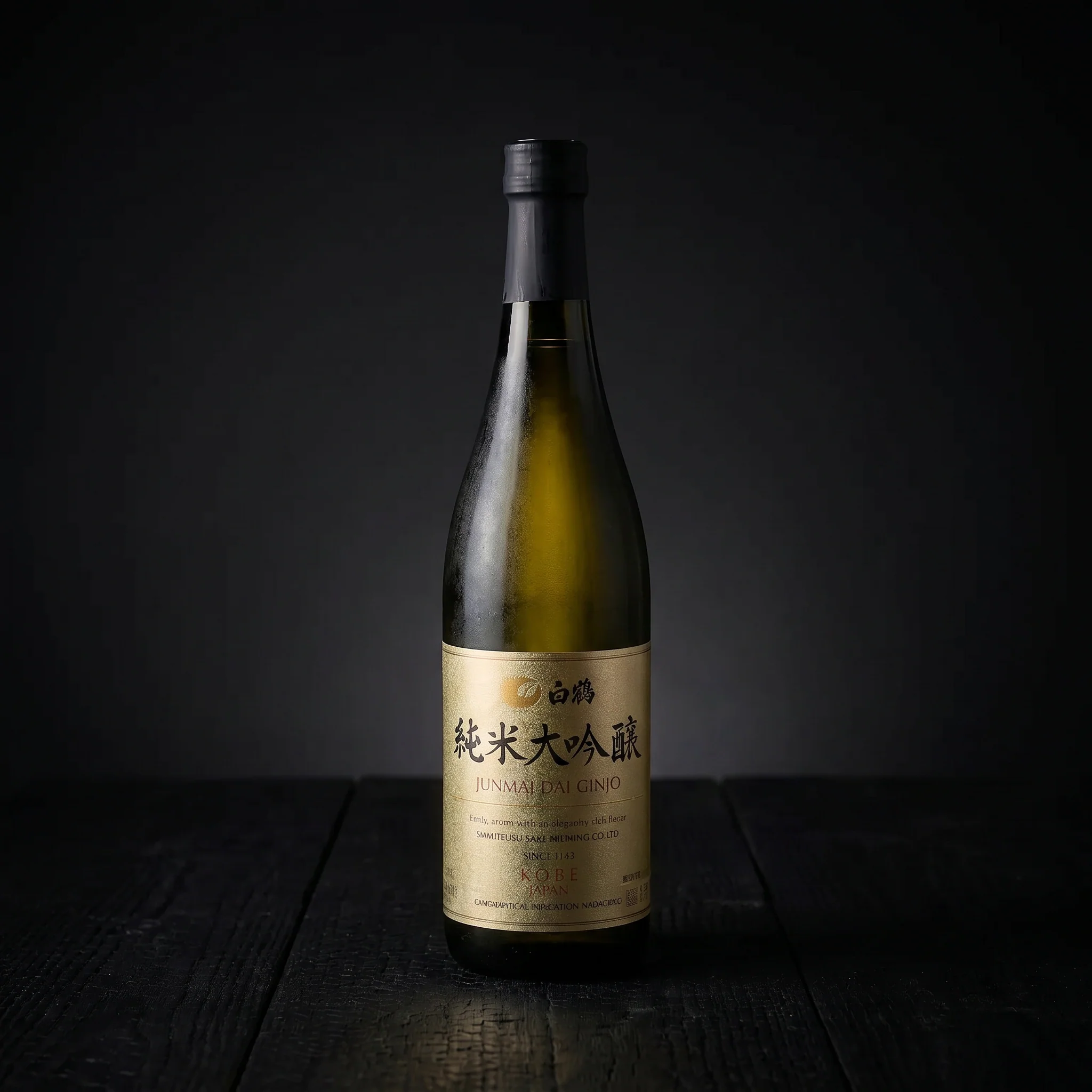
Hakutsuru, Junmai Daiginjo, 720ml
The Top Sake Grade, Pure Rice and Beautifully Polished
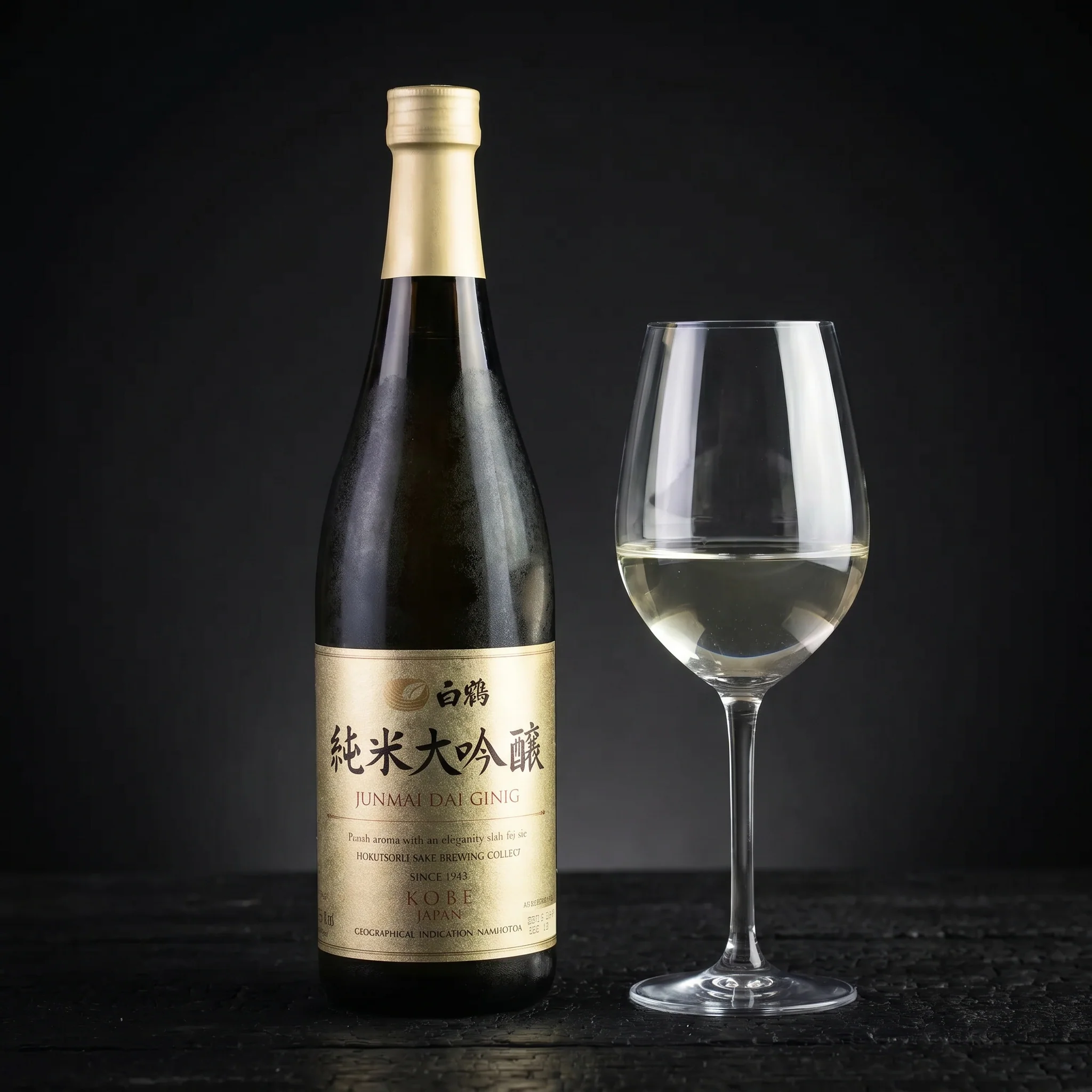
Junmai daiginjo is the summit of sake classification: rice polished down to its starchy core, brewed slowly and cool, with nothing added but water, rice and koji. Hakutsuru's, from the 1743 Nada brewery, is polished to 50% and shows the hallmarks of the grade, ripe apple and pear on the nose and a smooth, velvety texture, with a clean rice sweetness underneath. At 15.3% it is fragrant and refined, the bottle to reach for when the sake itself is the point.
Why Sommeliers Choose This
- The top grade: junmai daiginjo, rice polished to 50% and brewed pure, with no added brewing alcohol
- Ginjo aromatics: ripe apple and pear on the nose, the fragrant style cool slow fermentation produces
- Velvety texture: smooth and rounded on the palate with a subtle rice sweetness
- Hakutsuru pedigree: from Nada, Kobe, the home of fine sake, by a house founded in 1743
How to Serve
- Lightly chilled: serve at 10–15°C; the cooler end protects the delicate aromatics
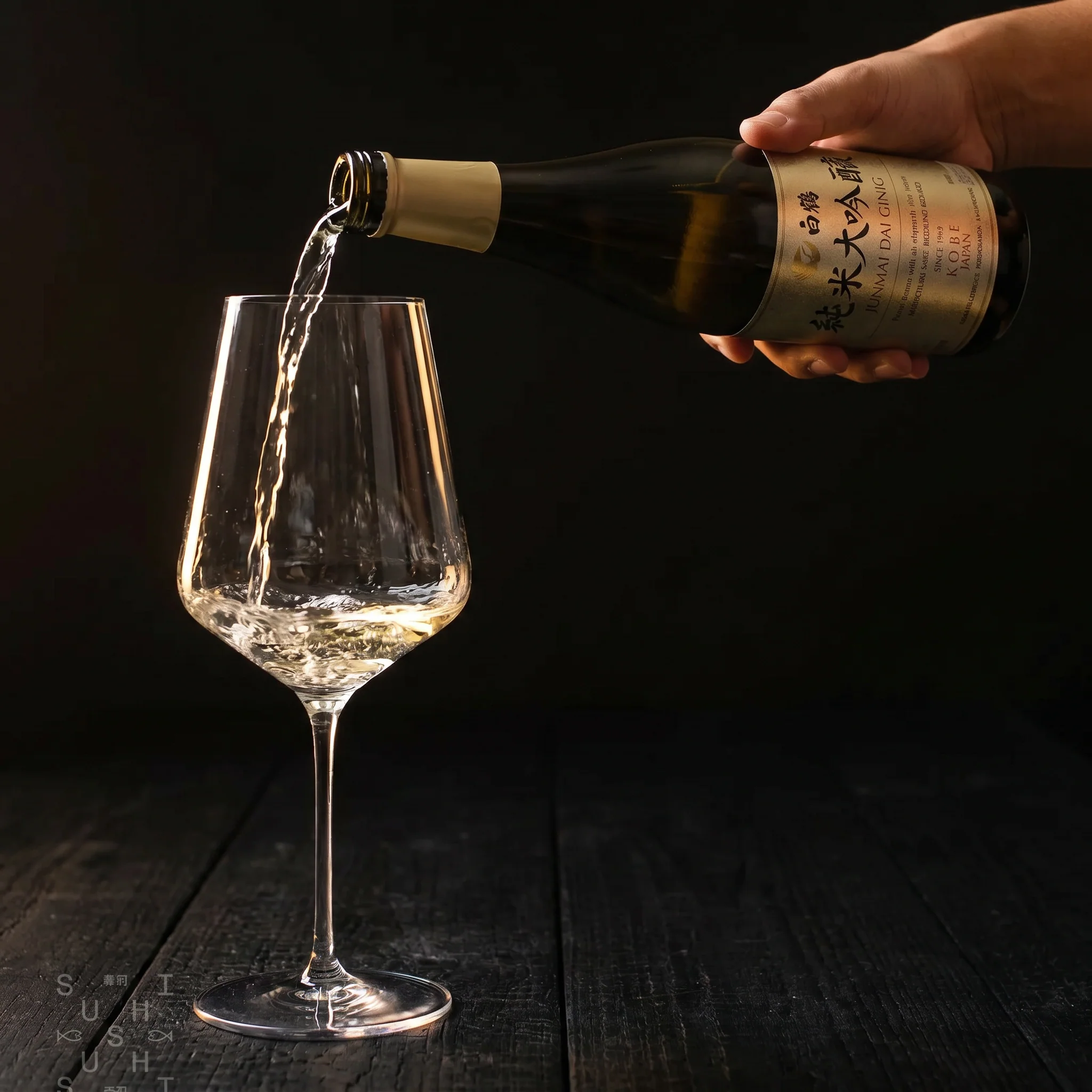
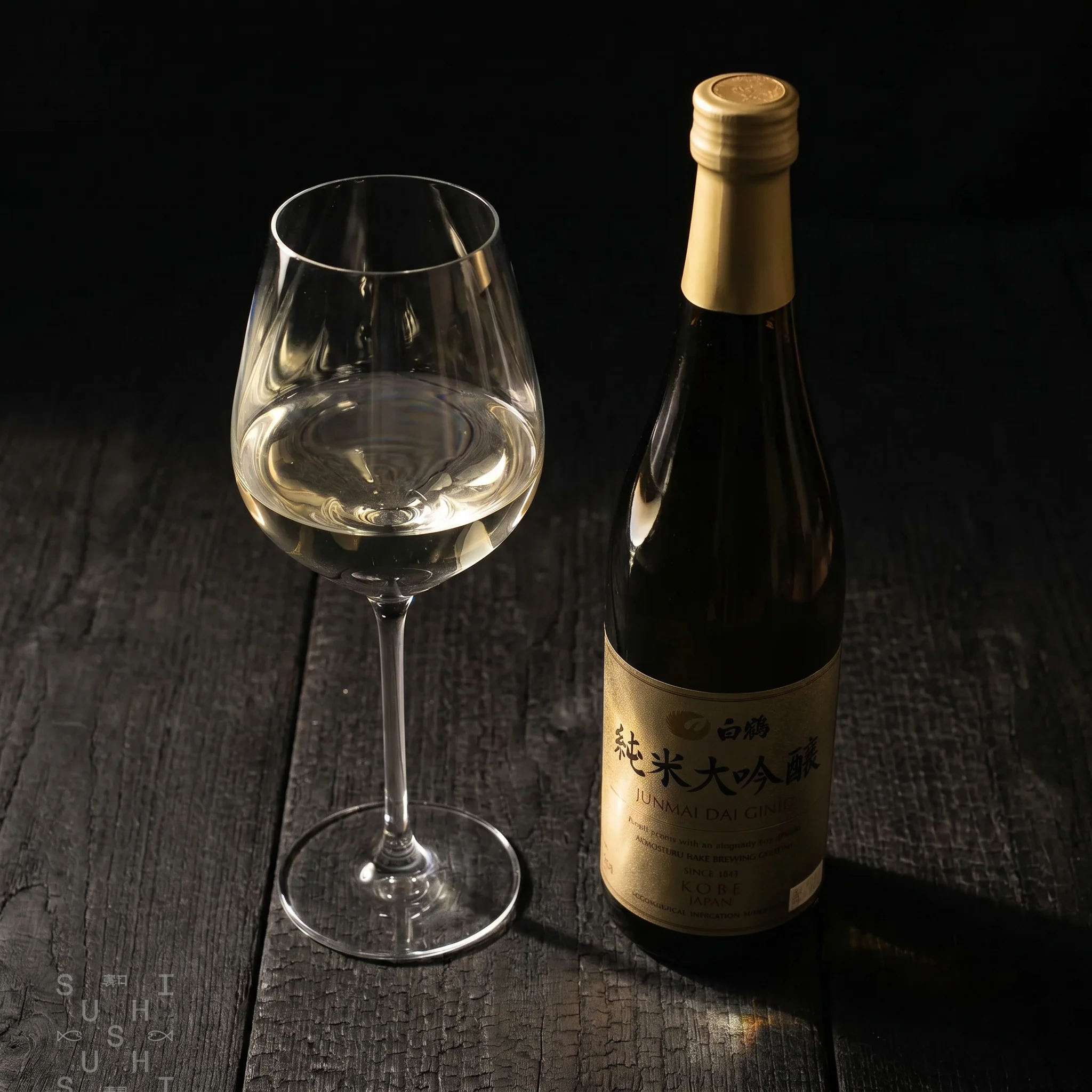
- Use a wine glass: a tulip glass opens up the apple and pear far better than a small cup
- Do not warm it: heat blows off the fragrance that makes a daiginjo worth the price
- Pair delicately: sashimi, white fish, lighter dishes that let the sake speak
純米大吟醸 — What junmai daiginjo means
Sake grade comes down to two things: how much the rice is polished, and whether any brewing alcohol is added. Daiginjo (大吟醸) requires the rice to be milled to at least 50% of its original size, stripping away the outer protein and fat to leave the pure starch core, which is then fermented long and cool to coax out fragrant, fruity aromatics. Junmai (純米, "pure rice") means exactly that, made with only rice, water and koji, with no distilled alcohol added. Put together, junmai daiginjo is the most demanding grade to make. Hakutsuru has been refining this craft in Nada since 1743, in a district prized for its hard Rokko water, premium rice and centuries-old toji tradition.
Learn more: The SushiSushi Guide to Hakutsuru Sake
How is junmai daiginjo different from ordinary sake?
Mostly polish and purity. Everyday sake uses rice milled far less and often has a little distilled alcohol added to lighten it and stretch the batch. Junmai daiginjo polishes the rice to at least 50%, uses no added alcohol, and is fermented slowly at low temperature, which is what gives it that clean, fragrant, fruit-driven character and silky texture. It is lighter and more aromatic than a robust everyday junmai, and it rewards being served cool in a wine glass rather than warmed. In short, it is sake made for sipping and appreciating rather than simply drinking.
Product Details
| Grade | 純米大吟醸 — Junmai Daiginjo |
| Brand | Hakutsuru (白鶴), founded 1743 |
| Rice Polish | 50% |
| ABV | 15.3% |
| Sake Meter Value | +1 |
| Acidity | 1.3 |
| Volume | 720ml |
| Serve | Lightly chilled, 10–15°C |
| Origin | Nada, Kobe, Japan |
What is the difference between junmai, ginjo and daiginjo?
They describe two separate things that combine. Junmai means pure rice, made with no added distilled alcohol. Ginjo and daiginjo describe how far the rice is milled: ginjo is polished to at least 60%, daiginjo to at least 50%, with more polishing generally giving a more fragrant, refined sake. So junmai daiginjo is pure-rice sake at the highest polishing grade, the most labour-intensive and typically the most aromatic and delicate style.
What temperature should I serve it at?
Lightly chilled, around 10–15°C. A daiginjo's value is in its aroma, and gentle chilling keeps that fragrance tight and fresh. Avoid warming it, which drives off the delicate apple and pear notes and flattens the sake. Serving it in a wine glass rather than a small ochoko also helps, giving the aromatics room to open. Take it out of the fridge a few minutes before pouring so it is cool rather than ice-cold.
How should I store it?
Keep it cool and out of direct light, ideally refrigerated, especially once opened. Premium ginjo and daiginjo sake are more delicate than everyday styles and their aromatics fade with heat and light. Stand the bottle upright, and once opened drink it within a week or two for the best of its fragrance. Unopened and kept cold, it will hold well for several months.
Original: $61.67
-65%$61.67
$21.58More Images
Hakutsuru, Junmai Daiginjo, 720ml
The Top Sake Grade, Pure Rice and Beautifully Polished
Junmai daiginjo is the summit of sake classification: rice polished down to its starchy core, brewed slowly and cool, with nothing added but water, rice and koji. Hakutsuru's, from the 1743 Nada brewery, is polished to 50% and shows the hallmarks of the grade, ripe apple and pear on the nose and a smooth, velvety texture, with a clean rice sweetness underneath. At 15.3% it is fragrant and refined, the bottle to reach for when the sake itself is the point.
Why Sommeliers Choose This
- The top grade: junmai daiginjo, rice polished to 50% and brewed pure, with no added brewing alcohol
- Ginjo aromatics: ripe apple and pear on the nose, the fragrant style cool slow fermentation produces
- Velvety texture: smooth and rounded on the palate with a subtle rice sweetness
- Hakutsuru pedigree: from Nada, Kobe, the home of fine sake, by a house founded in 1743
How to Serve
- Lightly chilled: serve at 10–15°C; the cooler end protects the delicate aromatics
- Use a wine glass: a tulip glass opens up the apple and pear far better than a small cup
- Do not warm it: heat blows off the fragrance that makes a daiginjo worth the price
- Pair delicately: sashimi, white fish, lighter dishes that let the sake speak
純米大吟醸 — What junmai daiginjo means
Sake grade comes down to two things: how much the rice is polished, and whether any brewing alcohol is added. Daiginjo (大吟醸) requires the rice to be milled to at least 50% of its original size, stripping away the outer protein and fat to leave the pure starch core, which is then fermented long and cool to coax out fragrant, fruity aromatics. Junmai (純米, "pure rice") means exactly that, made with only rice, water and koji, with no distilled alcohol added. Put together, junmai daiginjo is the most demanding grade to make. Hakutsuru has been refining this craft in Nada since 1743, in a district prized for its hard Rokko water, premium rice and centuries-old toji tradition.
Learn more: The SushiSushi Guide to Hakutsuru Sake
How is junmai daiginjo different from ordinary sake?
Mostly polish and purity. Everyday sake uses rice milled far less and often has a little distilled alcohol added to lighten it and stretch the batch. Junmai daiginjo polishes the rice to at least 50%, uses no added alcohol, and is fermented slowly at low temperature, which is what gives it that clean, fragrant, fruit-driven character and silky texture. It is lighter and more aromatic than a robust everyday junmai, and it rewards being served cool in a wine glass rather than warmed. In short, it is sake made for sipping and appreciating rather than simply drinking.
Product Details
| Grade | 純米大吟醸 — Junmai Daiginjo |
| Brand | Hakutsuru (白鶴), founded 1743 |
| Rice Polish | 50% |
| ABV | 15.3% |
| Sake Meter Value | +1 |
| Acidity | 1.3 |
| Volume | 720ml |
| Serve | Lightly chilled, 10–15°C |
| Origin | Nada, Kobe, Japan |
What is the difference between junmai, ginjo and daiginjo?
They describe two separate things that combine. Junmai means pure rice, made with no added distilled alcohol. Ginjo and daiginjo describe how far the rice is milled: ginjo is polished to at least 60%, daiginjo to at least 50%, with more polishing generally giving a more fragrant, refined sake. So junmai daiginjo is pure-rice sake at the highest polishing grade, the most labour-intensive and typically the most aromatic and delicate style.
What temperature should I serve it at?
Lightly chilled, around 10–15°C. A daiginjo's value is in its aroma, and gentle chilling keeps that fragrance tight and fresh. Avoid warming it, which drives off the delicate apple and pear notes and flattens the sake. Serving it in a wine glass rather than a small ochoko also helps, giving the aromatics room to open. Take it out of the fridge a few minutes before pouring so it is cool rather than ice-cold.
How should I store it?
Keep it cool and out of direct light, ideally refrigerated, especially once opened. Premium ginjo and daiginjo sake are more delicate than everyday styles and their aromatics fade with heat and light. Stand the bottle upright, and once opened drink it within a week or two for the best of its fragrance. Unopened and kept cold, it will hold well for several months.
Product Information
Product Information
Shipping & Returns
Shipping & Returns
Description
The Top Sake Grade, Pure Rice and Beautifully Polished
Junmai daiginjo is the summit of sake classification: rice polished down to its starchy core, brewed slowly and cool, with nothing added but water, rice and koji. Hakutsuru's, from the 1743 Nada brewery, is polished to 50% and shows the hallmarks of the grade, ripe apple and pear on the nose and a smooth, velvety texture, with a clean rice sweetness underneath. At 15.3% it is fragrant and refined, the bottle to reach for when the sake itself is the point.
Why Sommeliers Choose This
- The top grade: junmai daiginjo, rice polished to 50% and brewed pure, with no added brewing alcohol
- Ginjo aromatics: ripe apple and pear on the nose, the fragrant style cool slow fermentation produces
- Velvety texture: smooth and rounded on the palate with a subtle rice sweetness
- Hakutsuru pedigree: from Nada, Kobe, the home of fine sake, by a house founded in 1743
How to Serve
- Lightly chilled: serve at 10–15°C; the cooler end protects the delicate aromatics
- Use a wine glass: a tulip glass opens up the apple and pear far better than a small cup
- Do not warm it: heat blows off the fragrance that makes a daiginjo worth the price
- Pair delicately: sashimi, white fish, lighter dishes that let the sake speak
純米大吟醸 — What junmai daiginjo means
Sake grade comes down to two things: how much the rice is polished, and whether any brewing alcohol is added. Daiginjo (大吟醸) requires the rice to be milled to at least 50% of its original size, stripping away the outer protein and fat to leave the pure starch core, which is then fermented long and cool to coax out fragrant, fruity aromatics. Junmai (純米, "pure rice") means exactly that, made with only rice, water and koji, with no distilled alcohol added. Put together, junmai daiginjo is the most demanding grade to make. Hakutsuru has been refining this craft in Nada since 1743, in a district prized for its hard Rokko water, premium rice and centuries-old toji tradition.
Learn more: The SushiSushi Guide to Hakutsuru Sake
How is junmai daiginjo different from ordinary sake?
Mostly polish and purity. Everyday sake uses rice milled far less and often has a little distilled alcohol added to lighten it and stretch the batch. Junmai daiginjo polishes the rice to at least 50%, uses no added alcohol, and is fermented slowly at low temperature, which is what gives it that clean, fragrant, fruit-driven character and silky texture. It is lighter and more aromatic than a robust everyday junmai, and it rewards being served cool in a wine glass rather than warmed. In short, it is sake made for sipping and appreciating rather than simply drinking.
Product Details
| Grade | 純米大吟醸 — Junmai Daiginjo |
| Brand | Hakutsuru (白鶴), founded 1743 |
| Rice Polish | 50% |
| ABV | 15.3% |
| Sake Meter Value | +1 |
| Acidity | 1.3 |
| Volume | 720ml |
| Serve | Lightly chilled, 10–15°C |
| Origin | Nada, Kobe, Japan |
What is the difference between junmai, ginjo and daiginjo?
They describe two separate things that combine. Junmai means pure rice, made with no added distilled alcohol. Ginjo and daiginjo describe how far the rice is milled: ginjo is polished to at least 60%, daiginjo to at least 50%, with more polishing generally giving a more fragrant, refined sake. So junmai daiginjo is pure-rice sake at the highest polishing grade, the most labour-intensive and typically the most aromatic and delicate style.
What temperature should I serve it at?
Lightly chilled, around 10–15°C. A daiginjo's value is in its aroma, and gentle chilling keeps that fragrance tight and fresh. Avoid warming it, which drives off the delicate apple and pear notes and flattens the sake. Serving it in a wine glass rather than a small ochoko also helps, giving the aromatics room to open. Take it out of the fridge a few minutes before pouring so it is cool rather than ice-cold.
How should I store it?
Keep it cool and out of direct light, ideally refrigerated, especially once opened. Premium ginjo and daiginjo sake are more delicate than everyday styles and their aromatics fade with heat and light. Stand the bottle upright, and once opened drink it within a week or two for the best of its fragrance. Unopened and kept cold, it will hold well for several months.