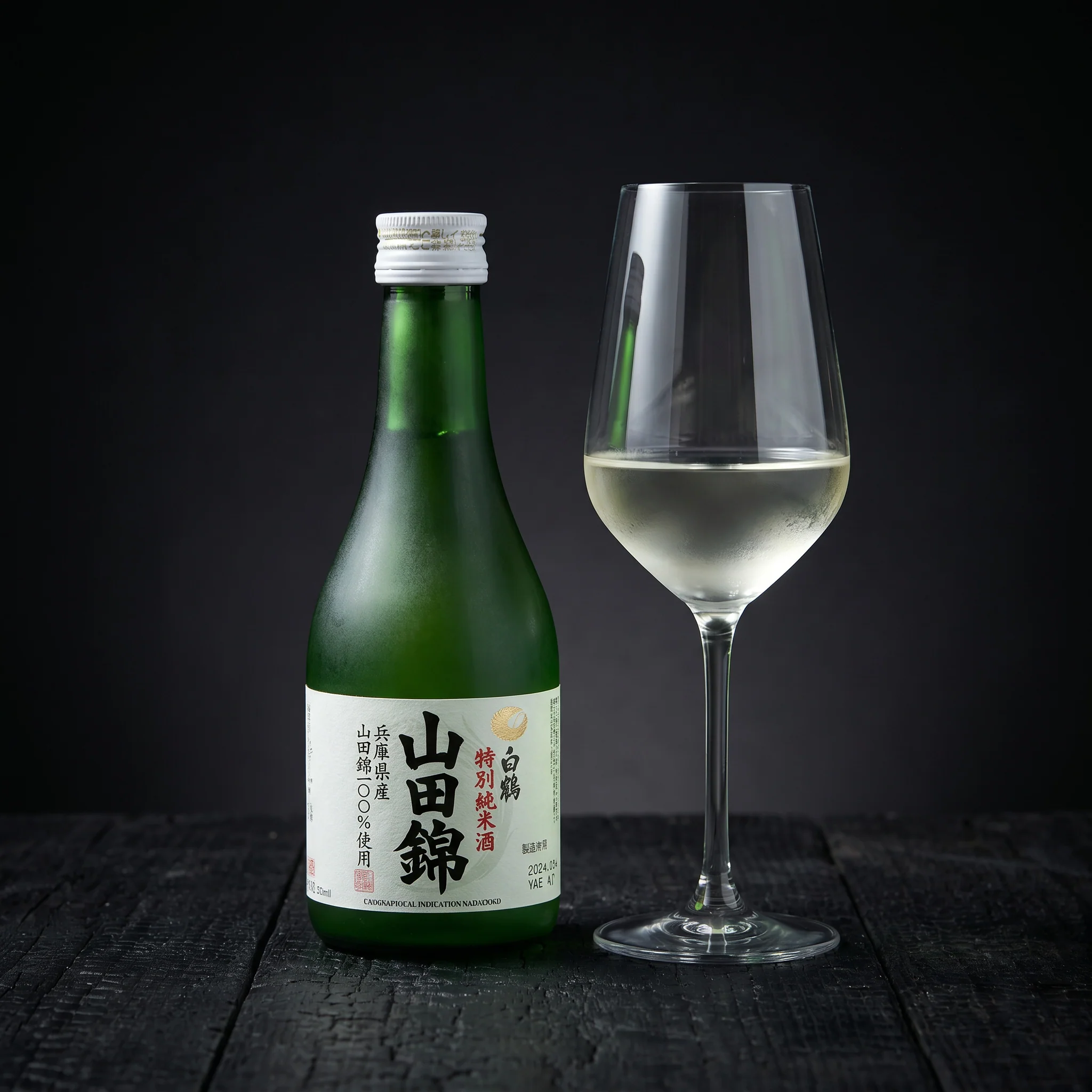
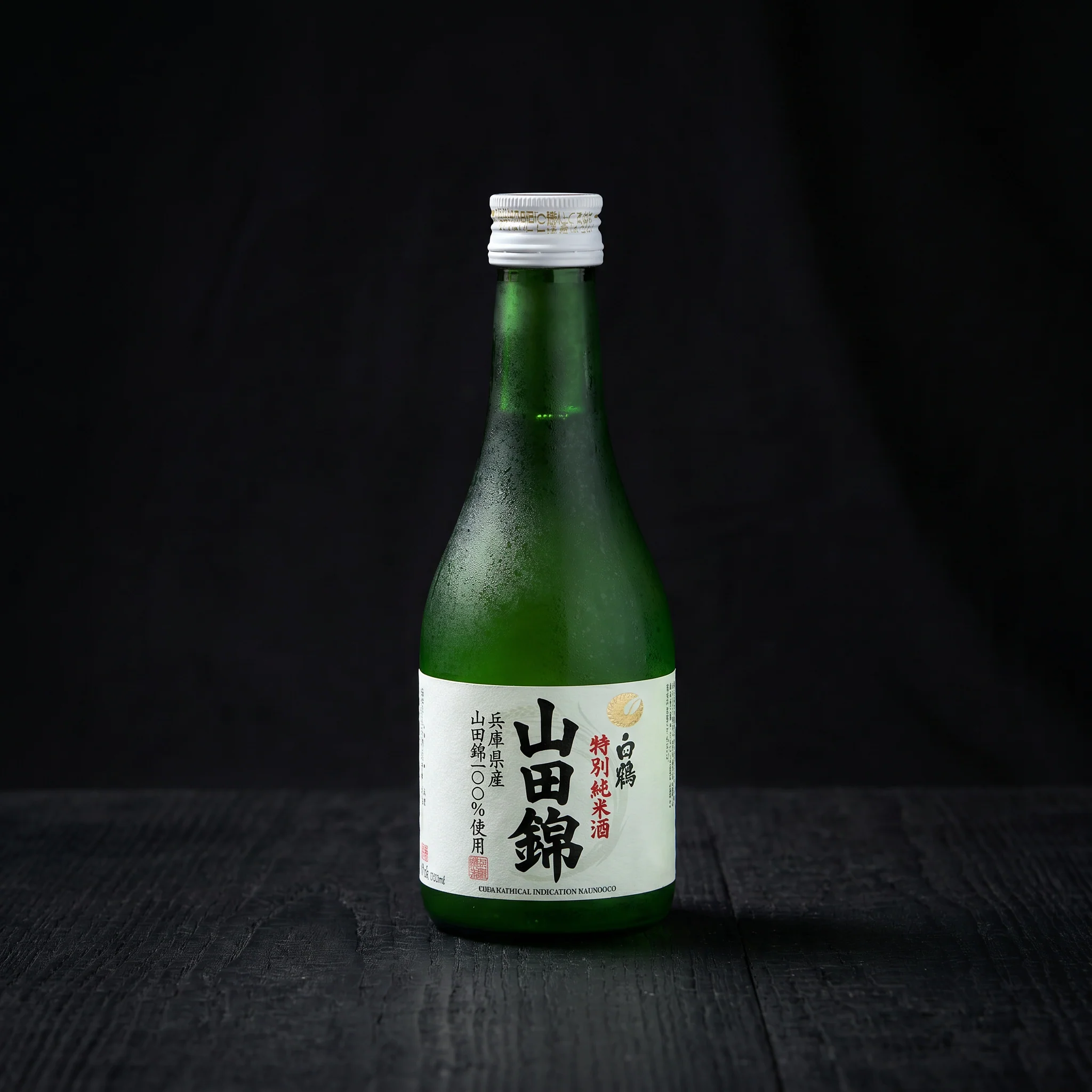
Hakutsuru, Yamada Nishiki Tokubetsu Junmai, 300ml
A Special Junmai, Brewed with the King of Sake Rice — in a Handy 300ml
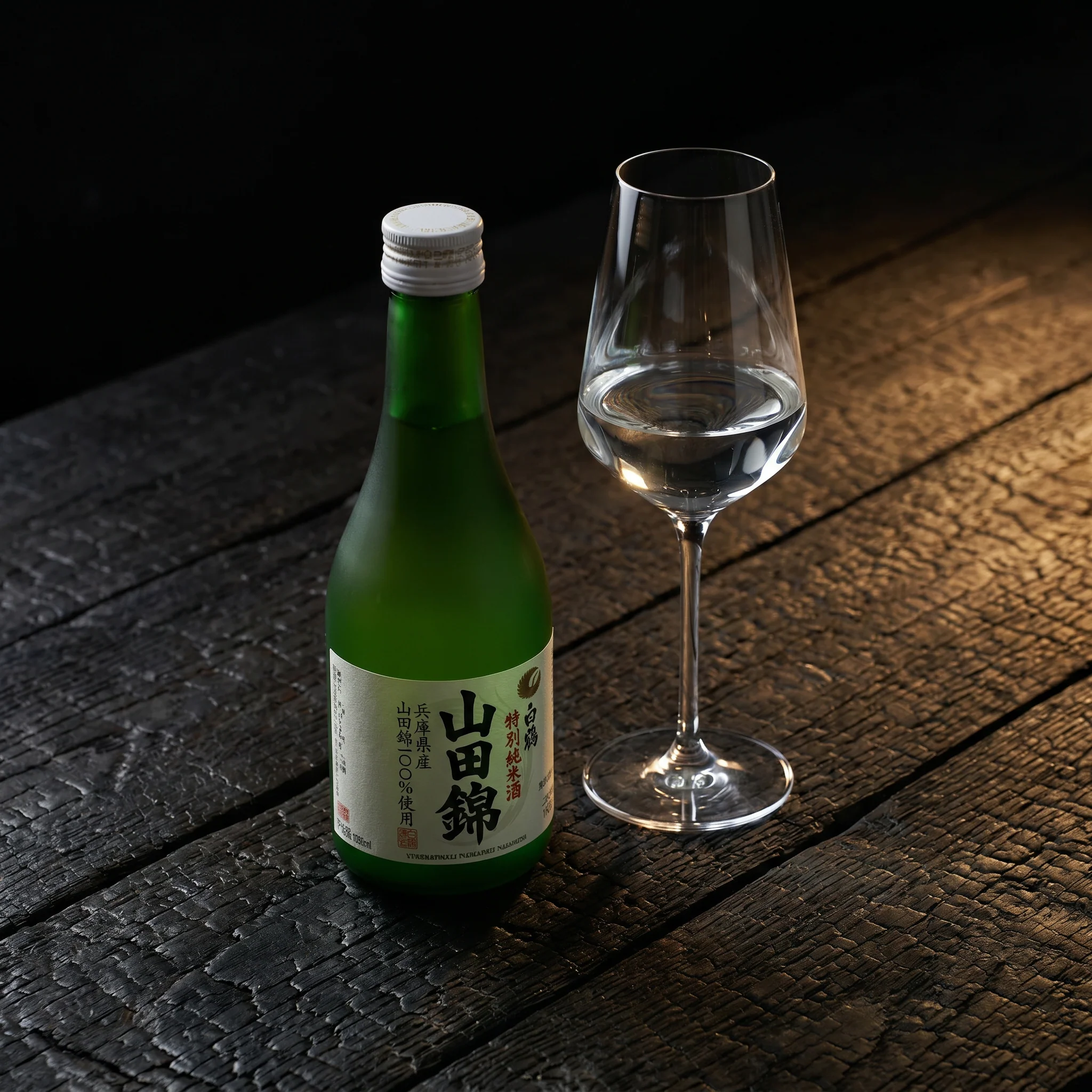
"Tokubetsu" means special, and what makes this junmai special is the rice: Yamada Nishiki, widely regarded as the king of sake rice, prized for the clean, structured sake it produces. Hakutsuru's is pure rice, smooth and savoury, with toasted almond on the nose and a clear, clean aftertaste. The 300ml bottle is the perfect size to try it, to serve one or two, or to keep a premium junmai on hand without opening a full bottle. At 14.5% it drinks beautifully chilled or gently warmed.
Want a full-size bottle? The same sake is available in 720ml.
Why Chefs Choose This
- Yamada Nishiki rice: brewed with the most prized sake rice, the "king" variety, for clean structure and depth
- Tokubetsu junmai: a "special" pure-rice grade, a step up from everyday junmai in care and quality
- Handy 300ml: the right size to try the sake, serve a couple, or pour without opening a big bottle
- Hakutsuru pedigree: from Nada, Kobe, the home of fine sake and of Yamada Nishiki, by a house founded in 1743
How to Serve
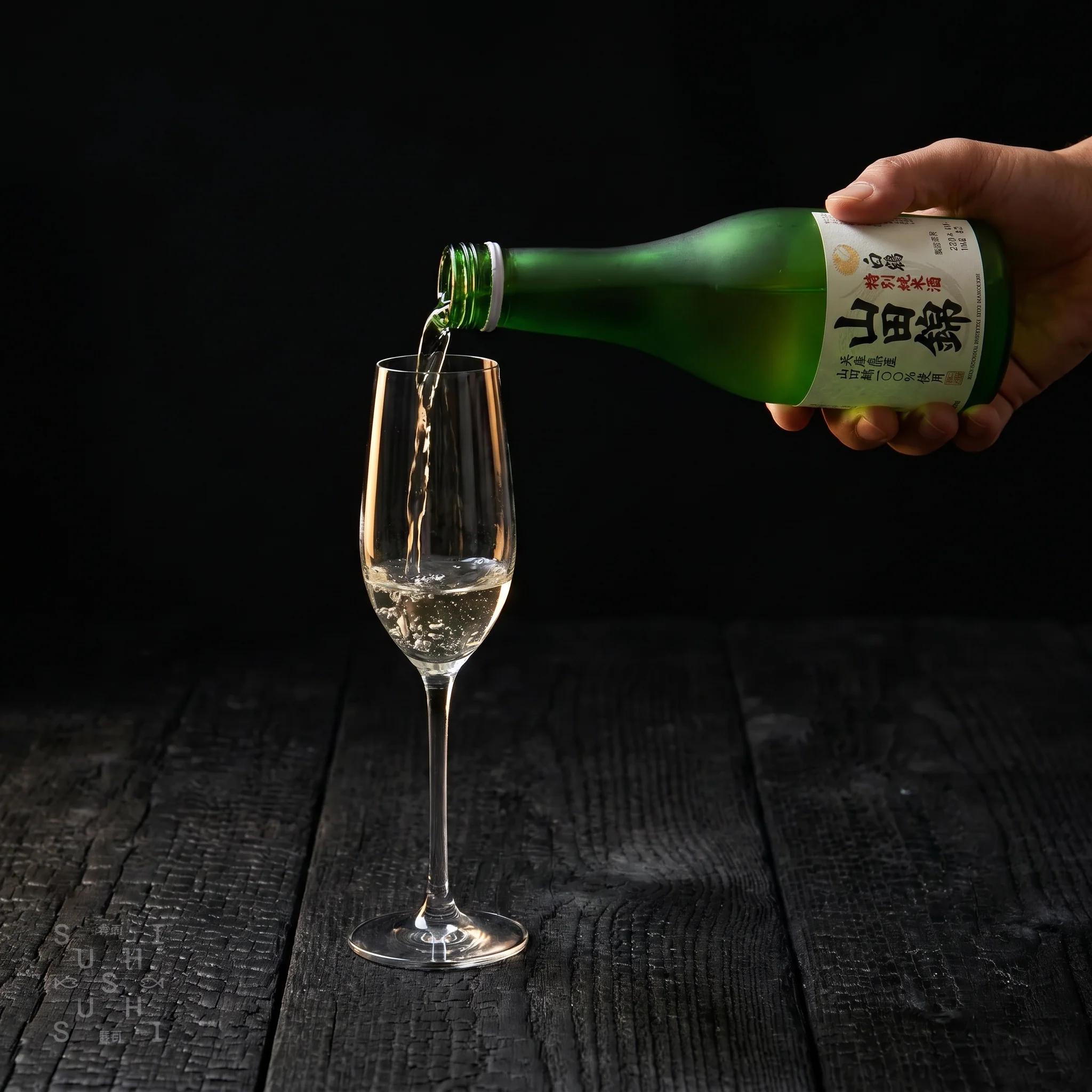
- Chilled: 5–15°C for a clean, smooth pour that shows the almond note
- Warmed (kan): 30–50°C to round out the savoury rice character
- With food: pairs with sukiyaki, tofu dishes and even risotto
- Try before the big bottle: a low-commitment way to get to know a premium junmai
山田錦 — Yamada Nishiki, the king of sake rice
Sake is only as good as its rice, and Yamada Nishiki (山田錦) is the most revered variety of all, grown in Hyogo Prefecture, the region around Nada, since the early twentieth century. Its large, strong grain holds together through heavy polishing and carries a dense starch core, which is exactly what a brewer wants for clean, structured, refined sake. "Tokubetsu" (特別) means special: a tokubetsu junmai is a pure-rice sake made with extra care, often through higher polishing or a premium rice like this one. Hakutsuru, brewing in Nada since 1743, sits in the heart of Yamada Nishiki country, which is part of why Nada became the home of fine sake.
Learn more: The SushiSushi Guide to Hakutsuru Sake
What makes Yamada Nishiki rice so prized?
Two things: the size and strength of the grain, and its starch structure. Yamada Nishiki has a large grain with a clearly defined white starch core (shinpaku) and low protein and fat in the outer layers, the parts a brewer polishes away. That means it can be milled hard without shattering, and what remains is clean starch that ferments into refined, well-structured sake with depth but without coarseness. It is harder to grow and more expensive than ordinary rice, which is why brewers reserve it for their better bottles, exactly as Hakutsuru has here.
Product Details
| Grade | 特別純米 — Tokubetsu Junmai |
| Rice | Yamada Nishiki (山田錦) |
| Brand | Hakutsuru (白鶴), founded 1743 |
| Rice Polish | 70% |
| ABV | 14.5% |
| Sake Meter Value | +3 (off-dry) |
| Acidity | 1.5 |
| Volume | 300ml |
| Serve | Chilled (5–15°C) or warmed (30–50°C) |
| Origin | Nada, Kobe, Japan |
What does "tokubetsu" junmai mean?
Tokubetsu (特別) means "special". A tokubetsu junmai is a pure-rice sake the brewer has made with something extra, usually a higher polishing ratio than a standard junmai, or a premium rice such as the Yamada Nishiki used here. It signals a step up in care and quality above an everyday junmai, while keeping the food-friendly body of a junmai rather than reaching for full ginjo delicacy.
Is 300ml a good size to buy?
It is ideal when you want a premium sake without committing to a 720ml bottle. 300ml is roughly two generous servings, perfect for trying a new style, for one or two people over a meal, or for keeping a good junmai on hand to open fresh rather than working through a larger bottle. Like all sake, it is best enjoyed soon after opening, so a smaller format keeps every pour fresh.
Should I serve it warm or cold?
Both work. Chilled to 5–15°C it is clean and smooth and shows its toasted-almond note; warmed to 30–50°C it rounds out and the savoury rice character comes forward, which suits colder weather and hot food. As a tokubetsu junmai it is versatile enough to take either, so let the season and the dish decide. Warm it gently in a hot water bath rather than a microwave for an even result.
Original: $26.81
-65%$26.81
$9.38More Images
Hakutsuru, Yamada Nishiki Tokubetsu Junmai, 300ml
A Special Junmai, Brewed with the King of Sake Rice — in a Handy 300ml
"Tokubetsu" means special, and what makes this junmai special is the rice: Yamada Nishiki, widely regarded as the king of sake rice, prized for the clean, structured sake it produces. Hakutsuru's is pure rice, smooth and savoury, with toasted almond on the nose and a clear, clean aftertaste. The 300ml bottle is the perfect size to try it, to serve one or two, or to keep a premium junmai on hand without opening a full bottle. At 14.5% it drinks beautifully chilled or gently warmed.
Want a full-size bottle? The same sake is available in 720ml.
Why Chefs Choose This
- Yamada Nishiki rice: brewed with the most prized sake rice, the "king" variety, for clean structure and depth
- Tokubetsu junmai: a "special" pure-rice grade, a step up from everyday junmai in care and quality
- Handy 300ml: the right size to try the sake, serve a couple, or pour without opening a big bottle
- Hakutsuru pedigree: from Nada, Kobe, the home of fine sake and of Yamada Nishiki, by a house founded in 1743
How to Serve
- Chilled: 5–15°C for a clean, smooth pour that shows the almond note
- Warmed (kan): 30–50°C to round out the savoury rice character
- With food: pairs with sukiyaki, tofu dishes and even risotto
- Try before the big bottle: a low-commitment way to get to know a premium junmai
山田錦 — Yamada Nishiki, the king of sake rice
Sake is only as good as its rice, and Yamada Nishiki (山田錦) is the most revered variety of all, grown in Hyogo Prefecture, the region around Nada, since the early twentieth century. Its large, strong grain holds together through heavy polishing and carries a dense starch core, which is exactly what a brewer wants for clean, structured, refined sake. "Tokubetsu" (特別) means special: a tokubetsu junmai is a pure-rice sake made with extra care, often through higher polishing or a premium rice like this one. Hakutsuru, brewing in Nada since 1743, sits in the heart of Yamada Nishiki country, which is part of why Nada became the home of fine sake.
Learn more: The SushiSushi Guide to Hakutsuru Sake
What makes Yamada Nishiki rice so prized?
Two things: the size and strength of the grain, and its starch structure. Yamada Nishiki has a large grain with a clearly defined white starch core (shinpaku) and low protein and fat in the outer layers, the parts a brewer polishes away. That means it can be milled hard without shattering, and what remains is clean starch that ferments into refined, well-structured sake with depth but without coarseness. It is harder to grow and more expensive than ordinary rice, which is why brewers reserve it for their better bottles, exactly as Hakutsuru has here.
Product Details
| Grade | 特別純米 — Tokubetsu Junmai |
| Rice | Yamada Nishiki (山田錦) |
| Brand | Hakutsuru (白鶴), founded 1743 |
| Rice Polish | 70% |
| ABV | 14.5% |
| Sake Meter Value | +3 (off-dry) |
| Acidity | 1.5 |
| Volume | 300ml |
| Serve | Chilled (5–15°C) or warmed (30–50°C) |
| Origin | Nada, Kobe, Japan |
What does "tokubetsu" junmai mean?
Tokubetsu (特別) means "special". A tokubetsu junmai is a pure-rice sake the brewer has made with something extra, usually a higher polishing ratio than a standard junmai, or a premium rice such as the Yamada Nishiki used here. It signals a step up in care and quality above an everyday junmai, while keeping the food-friendly body of a junmai rather than reaching for full ginjo delicacy.
Is 300ml a good size to buy?
It is ideal when you want a premium sake without committing to a 720ml bottle. 300ml is roughly two generous servings, perfect for trying a new style, for one or two people over a meal, or for keeping a good junmai on hand to open fresh rather than working through a larger bottle. Like all sake, it is best enjoyed soon after opening, so a smaller format keeps every pour fresh.
Should I serve it warm or cold?
Both work. Chilled to 5–15°C it is clean and smooth and shows its toasted-almond note; warmed to 30–50°C it rounds out and the savoury rice character comes forward, which suits colder weather and hot food. As a tokubetsu junmai it is versatile enough to take either, so let the season and the dish decide. Warm it gently in a hot water bath rather than a microwave for an even result.
Product Information
Product Information
Shipping & Returns
Shipping & Returns
Description
A Special Junmai, Brewed with the King of Sake Rice — in a Handy 300ml
"Tokubetsu" means special, and what makes this junmai special is the rice: Yamada Nishiki, widely regarded as the king of sake rice, prized for the clean, structured sake it produces. Hakutsuru's is pure rice, smooth and savoury, with toasted almond on the nose and a clear, clean aftertaste. The 300ml bottle is the perfect size to try it, to serve one or two, or to keep a premium junmai on hand without opening a full bottle. At 14.5% it drinks beautifully chilled or gently warmed.
Want a full-size bottle? The same sake is available in 720ml.
Why Chefs Choose This
- Yamada Nishiki rice: brewed with the most prized sake rice, the "king" variety, for clean structure and depth
- Tokubetsu junmai: a "special" pure-rice grade, a step up from everyday junmai in care and quality
- Handy 300ml: the right size to try the sake, serve a couple, or pour without opening a big bottle
- Hakutsuru pedigree: from Nada, Kobe, the home of fine sake and of Yamada Nishiki, by a house founded in 1743
How to Serve
- Chilled: 5–15°C for a clean, smooth pour that shows the almond note
- Warmed (kan): 30–50°C to round out the savoury rice character
- With food: pairs with sukiyaki, tofu dishes and even risotto
- Try before the big bottle: a low-commitment way to get to know a premium junmai
山田錦 — Yamada Nishiki, the king of sake rice
Sake is only as good as its rice, and Yamada Nishiki (山田錦) is the most revered variety of all, grown in Hyogo Prefecture, the region around Nada, since the early twentieth century. Its large, strong grain holds together through heavy polishing and carries a dense starch core, which is exactly what a brewer wants for clean, structured, refined sake. "Tokubetsu" (特別) means special: a tokubetsu junmai is a pure-rice sake made with extra care, often through higher polishing or a premium rice like this one. Hakutsuru, brewing in Nada since 1743, sits in the heart of Yamada Nishiki country, which is part of why Nada became the home of fine sake.
Learn more: The SushiSushi Guide to Hakutsuru Sake
What makes Yamada Nishiki rice so prized?
Two things: the size and strength of the grain, and its starch structure. Yamada Nishiki has a large grain with a clearly defined white starch core (shinpaku) and low protein and fat in the outer layers, the parts a brewer polishes away. That means it can be milled hard without shattering, and what remains is clean starch that ferments into refined, well-structured sake with depth but without coarseness. It is harder to grow and more expensive than ordinary rice, which is why brewers reserve it for their better bottles, exactly as Hakutsuru has here.
Product Details
| Grade | 特別純米 — Tokubetsu Junmai |
| Rice | Yamada Nishiki (山田錦) |
| Brand | Hakutsuru (白鶴), founded 1743 |
| Rice Polish | 70% |
| ABV | 14.5% |
| Sake Meter Value | +3 (off-dry) |
| Acidity | 1.5 |
| Volume | 300ml |
| Serve | Chilled (5–15°C) or warmed (30–50°C) |
| Origin | Nada, Kobe, Japan |
What does "tokubetsu" junmai mean?
Tokubetsu (特別) means "special". A tokubetsu junmai is a pure-rice sake the brewer has made with something extra, usually a higher polishing ratio than a standard junmai, or a premium rice such as the Yamada Nishiki used here. It signals a step up in care and quality above an everyday junmai, while keeping the food-friendly body of a junmai rather than reaching for full ginjo delicacy.
Is 300ml a good size to buy?
It is ideal when you want a premium sake without committing to a 720ml bottle. 300ml is roughly two generous servings, perfect for trying a new style, for one or two people over a meal, or for keeping a good junmai on hand to open fresh rather than working through a larger bottle. Like all sake, it is best enjoyed soon after opening, so a smaller format keeps every pour fresh.
Should I serve it warm or cold?
Both work. Chilled to 5–15°C it is clean and smooth and shows its toasted-almond note; warmed to 30–50°C it rounds out and the savoury rice character comes forward, which suits colder weather and hot food. As a tokubetsu junmai it is versatile enough to take either, so let the season and the dish decide. Warm it gently in a hot water bath rather than a microwave for an even result.