Luxury Miso Bowl & Lid
The Lidded Bowl Miso Soup Is Meant to Be Served In
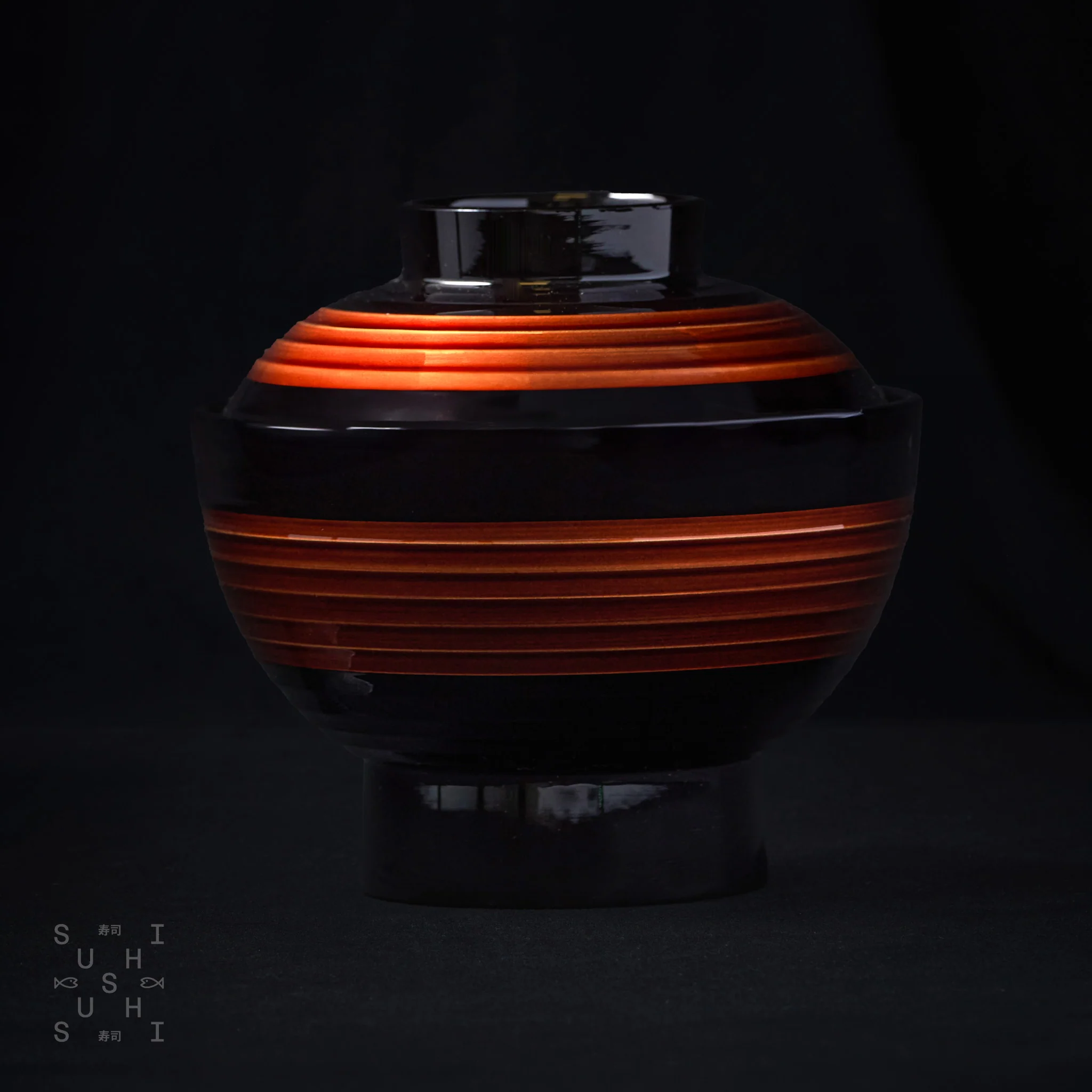
In Japan, miso soup arrives in a lidded bowl you lift and drink from, not a spoon-and-saucer affair. This is that bowl: a 235ml miso bowl with a matching lid, black inside and out with a single copper brushstroke around the rim. The lid keeps the soup hot on the way to the table and holds the aroma until the guest lifts it. It is a lacquer-finish bowl built for service, light in the hand and warm to hold, and it comes as a single or in cases for covering a full room.
Why Chefs Choose This
- Lidded for service: the matching lid holds heat and aroma to the table, and reveals the soup when the guest lifts it
- Light and warm to hold: a lacquer-finish bowl is comfortable in the hand even when full of hot soup, the way a miso bowl is meant to be drunk
- Service-ready: hard-wearing finish that stands up to a busy pass better than fragile ceramic
- Buy by the case: available singly or in cases of 4, 10 or 20 to kit out a section in one go
How to Use
- Miso soup: the classic use, lid on, carried to the table hot and opened in front of the guest
- Small sides: chawanmushi, pickles, a small donburi or a dressed salad all suit the size
- Hold the aroma: lidding a clear dashi or a yuzu-scented broth keeps the first lift fragrant
- Fill it well: pair with a good red miso and a proper dashi for the soup itself
Owan — the bowl you drink from
A Japanese soup bowl is an owan (お椀), traditionally turned from wood and finished in urushi lacquer. The reasons are practical as much as beautiful: lacquer is light and a poor conductor of heat, so the bowl stays cool enough to cradle in the hand while the soup inside stays hot, and miso soup is drunk straight from the bowl rather than spooned. The lid does two jobs, holding the heat on the way to the table and trapping the aroma so it releases the moment the guest lifts it. This bowl follows that form in a durable, lacquer-finished version made for the realities of service rather than the cabinet.
Learn more: How to Make Miso Soup
Why are miso soup bowls made of lacquer rather than ceramic?
Because you hold them. Miso soup is drunk directly from the bowl, lifted in one hand, so the bowl needs to stay comfortable to hold when it is full of something hot. Lacquer, and a good lacquer-finish, insulates far better than ceramic: the soup stays hot while the outside stays touchable. Lacquer bowls are also lighter and do not chip the way porcelain does, which matters in service. The look is part of it too, the deep gloss and a single brushstroke read as quietly expensive, but the choice of material is rooted in how the soup is actually drunk.
Product Details
| Type | Lidded miso soup bowl (owan, お椀) |
| Brand | Yasuragi |
| Material | Lacquer-finish (durable, service grade) |
| Colour | Black with copper brushstroke |
| Dimensions | 99 x 93mm |
| Capacity | 235ml |
| Origin | Japan |
| Available | Single or cases of 4, 10 or 20 |
What is a lidded miso bowl for?
It is the traditional vessel for miso soup, an owan, and the lid is functional rather than decorative. It keeps the soup hot between the kitchen and the table, and it traps the aroma so that lifting the lid releases the smell of the dashi and miso at the moment of serving. Miso soup is drunk straight from the bowl, lifted in the hand, with chopsticks used for any solids, so the bowl is sized and weighted to be held rather than left on the table.
How do you care for a lacquer-finish bowl?
Hand washing is best for any lacquer-finish tableware. Wash in warm water with a soft cloth or sponge and a mild detergent, avoid abrasive scourers, and dry promptly. Keep it away from prolonged soaking, very high heat and the harsh cycles of a commercial dishwasher, all of which dull or damage a lacquer finish over time. Treated gently it keeps its gloss and the depth of the black for years of service.
What else can you serve in it?
Beyond miso soup, the size suits clear dashi soups, chawanmushi (savoury steamed custard), a small donburi or rice bowl, pickles, or a dressed side. The lid is useful wherever you want to hold heat or present something covered for a reveal at the table. At 235ml it is the standard single-portion soup size, so it slots straight into a set-menu or à la carte service.
Original: $37.54
-65%$37.54
$13.14Luxury Miso Bowl & Lid
The Lidded Bowl Miso Soup Is Meant to Be Served In
In Japan, miso soup arrives in a lidded bowl you lift and drink from, not a spoon-and-saucer affair. This is that bowl: a 235ml miso bowl with a matching lid, black inside and out with a single copper brushstroke around the rim. The lid keeps the soup hot on the way to the table and holds the aroma until the guest lifts it. It is a lacquer-finish bowl built for service, light in the hand and warm to hold, and it comes as a single or in cases for covering a full room.
Why Chefs Choose This
- Lidded for service: the matching lid holds heat and aroma to the table, and reveals the soup when the guest lifts it
- Light and warm to hold: a lacquer-finish bowl is comfortable in the hand even when full of hot soup, the way a miso bowl is meant to be drunk
- Service-ready: hard-wearing finish that stands up to a busy pass better than fragile ceramic
- Buy by the case: available singly or in cases of 4, 10 or 20 to kit out a section in one go
How to Use
- Miso soup: the classic use, lid on, carried to the table hot and opened in front of the guest
- Small sides: chawanmushi, pickles, a small donburi or a dressed salad all suit the size
- Hold the aroma: lidding a clear dashi or a yuzu-scented broth keeps the first lift fragrant
- Fill it well: pair with a good red miso and a proper dashi for the soup itself
Owan — the bowl you drink from
A Japanese soup bowl is an owan (お椀), traditionally turned from wood and finished in urushi lacquer. The reasons are practical as much as beautiful: lacquer is light and a poor conductor of heat, so the bowl stays cool enough to cradle in the hand while the soup inside stays hot, and miso soup is drunk straight from the bowl rather than spooned. The lid does two jobs, holding the heat on the way to the table and trapping the aroma so it releases the moment the guest lifts it. This bowl follows that form in a durable, lacquer-finished version made for the realities of service rather than the cabinet.
Learn more: How to Make Miso Soup
Why are miso soup bowls made of lacquer rather than ceramic?
Because you hold them. Miso soup is drunk directly from the bowl, lifted in one hand, so the bowl needs to stay comfortable to hold when it is full of something hot. Lacquer, and a good lacquer-finish, insulates far better than ceramic: the soup stays hot while the outside stays touchable. Lacquer bowls are also lighter and do not chip the way porcelain does, which matters in service. The look is part of it too, the deep gloss and a single brushstroke read as quietly expensive, but the choice of material is rooted in how the soup is actually drunk.
Product Details
| Type | Lidded miso soup bowl (owan, お椀) |
| Brand | Yasuragi |
| Material | Lacquer-finish (durable, service grade) |
| Colour | Black with copper brushstroke |
| Dimensions | 99 x 93mm |
| Capacity | 235ml |
| Origin | Japan |
| Available | Single or cases of 4, 10 or 20 |
What is a lidded miso bowl for?
It is the traditional vessel for miso soup, an owan, and the lid is functional rather than decorative. It keeps the soup hot between the kitchen and the table, and it traps the aroma so that lifting the lid releases the smell of the dashi and miso at the moment of serving. Miso soup is drunk straight from the bowl, lifted in the hand, with chopsticks used for any solids, so the bowl is sized and weighted to be held rather than left on the table.
How do you care for a lacquer-finish bowl?
Hand washing is best for any lacquer-finish tableware. Wash in warm water with a soft cloth or sponge and a mild detergent, avoid abrasive scourers, and dry promptly. Keep it away from prolonged soaking, very high heat and the harsh cycles of a commercial dishwasher, all of which dull or damage a lacquer finish over time. Treated gently it keeps its gloss and the depth of the black for years of service.
What else can you serve in it?
Beyond miso soup, the size suits clear dashi soups, chawanmushi (savoury steamed custard), a small donburi or rice bowl, pickles, or a dressed side. The lid is useful wherever you want to hold heat or present something covered for a reveal at the table. At 235ml it is the standard single-portion soup size, so it slots straight into a set-menu or à la carte service.
Product Information
Product Information
Shipping & Returns
Shipping & Returns
Description
The Lidded Bowl Miso Soup Is Meant to Be Served In
In Japan, miso soup arrives in a lidded bowl you lift and drink from, not a spoon-and-saucer affair. This is that bowl: a 235ml miso bowl with a matching lid, black inside and out with a single copper brushstroke around the rim. The lid keeps the soup hot on the way to the table and holds the aroma until the guest lifts it. It is a lacquer-finish bowl built for service, light in the hand and warm to hold, and it comes as a single or in cases for covering a full room.
Why Chefs Choose This
- Lidded for service: the matching lid holds heat and aroma to the table, and reveals the soup when the guest lifts it
- Light and warm to hold: a lacquer-finish bowl is comfortable in the hand even when full of hot soup, the way a miso bowl is meant to be drunk
- Service-ready: hard-wearing finish that stands up to a busy pass better than fragile ceramic
- Buy by the case: available singly or in cases of 4, 10 or 20 to kit out a section in one go
How to Use
- Miso soup: the classic use, lid on, carried to the table hot and opened in front of the guest
- Small sides: chawanmushi, pickles, a small donburi or a dressed salad all suit the size
- Hold the aroma: lidding a clear dashi or a yuzu-scented broth keeps the first lift fragrant
- Fill it well: pair with a good red miso and a proper dashi for the soup itself
Owan — the bowl you drink from
A Japanese soup bowl is an owan (お椀), traditionally turned from wood and finished in urushi lacquer. The reasons are practical as much as beautiful: lacquer is light and a poor conductor of heat, so the bowl stays cool enough to cradle in the hand while the soup inside stays hot, and miso soup is drunk straight from the bowl rather than spooned. The lid does two jobs, holding the heat on the way to the table and trapping the aroma so it releases the moment the guest lifts it. This bowl follows that form in a durable, lacquer-finished version made for the realities of service rather than the cabinet.
Learn more: How to Make Miso Soup
Why are miso soup bowls made of lacquer rather than ceramic?
Because you hold them. Miso soup is drunk directly from the bowl, lifted in one hand, so the bowl needs to stay comfortable to hold when it is full of something hot. Lacquer, and a good lacquer-finish, insulates far better than ceramic: the soup stays hot while the outside stays touchable. Lacquer bowls are also lighter and do not chip the way porcelain does, which matters in service. The look is part of it too, the deep gloss and a single brushstroke read as quietly expensive, but the choice of material is rooted in how the soup is actually drunk.
Product Details
| Type | Lidded miso soup bowl (owan, お椀) |
| Brand | Yasuragi |
| Material | Lacquer-finish (durable, service grade) |
| Colour | Black with copper brushstroke |
| Dimensions | 99 x 93mm |
| Capacity | 235ml |
| Origin | Japan |
| Available | Single or cases of 4, 10 or 20 |
What is a lidded miso bowl for?
It is the traditional vessel for miso soup, an owan, and the lid is functional rather than decorative. It keeps the soup hot between the kitchen and the table, and it traps the aroma so that lifting the lid releases the smell of the dashi and miso at the moment of serving. Miso soup is drunk straight from the bowl, lifted in the hand, with chopsticks used for any solids, so the bowl is sized and weighted to be held rather than left on the table.
How do you care for a lacquer-finish bowl?
Hand washing is best for any lacquer-finish tableware. Wash in warm water with a soft cloth or sponge and a mild detergent, avoid abrasive scourers, and dry promptly. Keep it away from prolonged soaking, very high heat and the harsh cycles of a commercial dishwasher, all of which dull or damage a lacquer finish over time. Treated gently it keeps its gloss and the depth of the black for years of service.
What else can you serve in it?
Beyond miso soup, the size suits clear dashi soups, chawanmushi (savoury steamed custard), a small donburi or rice bowl, pickles, or a dressed side. The lid is useful wherever you want to hold heat or present something covered for a reveal at the table. At 235ml it is the standard single-portion soup size, so it slots straight into a set-menu or à la carte service.