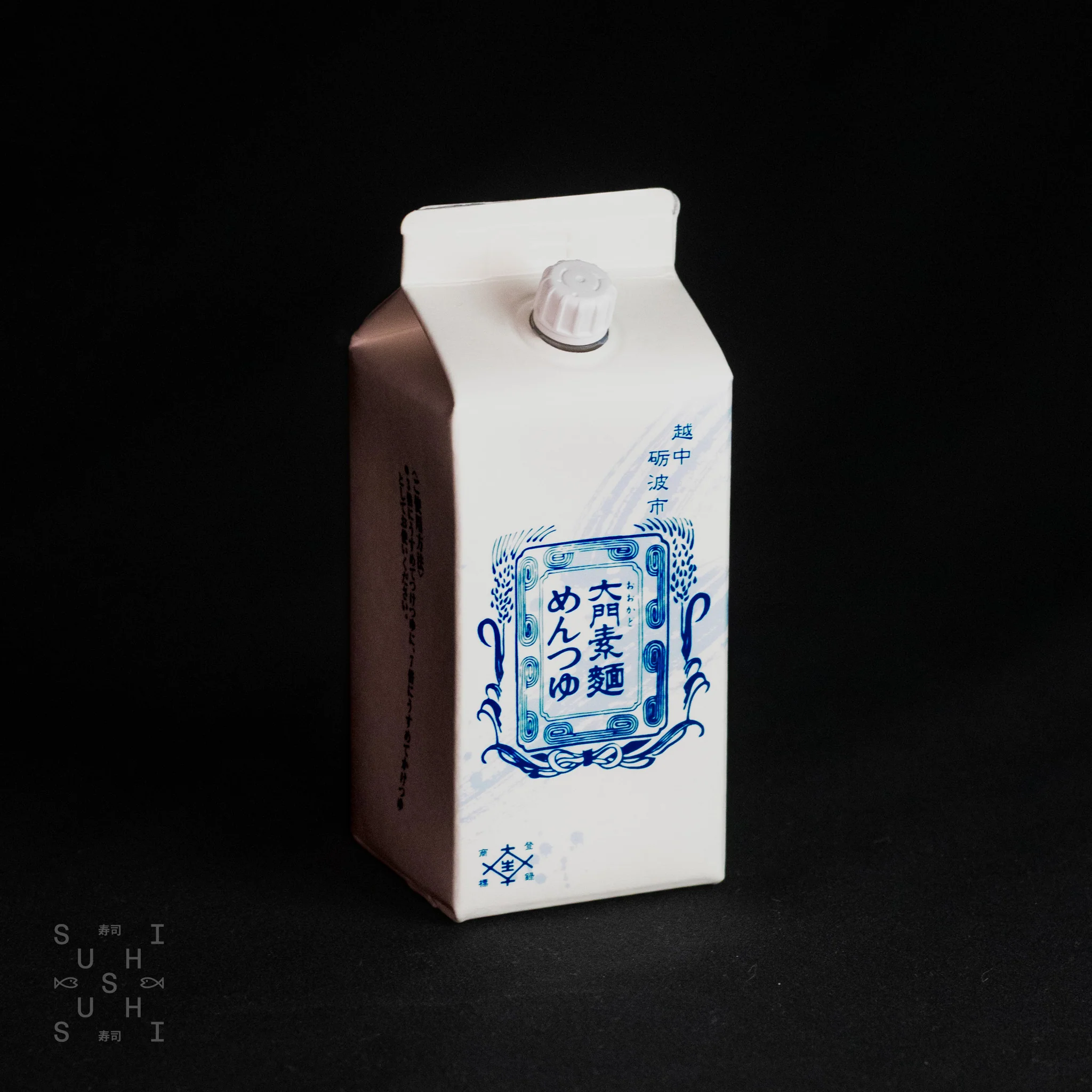
Daimon, Somen Tsuyu (Sweet Dashi Dipping Sauce), 200ml
The sweet-savoury dip for chilled somen.
Somen tsuyu is the cold dipping sauce that makes a summer bowl of somen: a balance of sweetness and deep umami, built on soy and bonito dashi. Daimon's version is smooth and well-rounded, leaning a touch sweeter, made by a Nara soy house brewing since 1688. Dilute with cold water and dip. 200ml.
Why Operators Choose This
- Balanced: sweet and savoury held together, smooth and rounded.
- Bonito dashi: a savoury seafood depth under the soy and sweetness.
- Ready to dilute: just add cold water, no building a tsuyu from scratch.
- Heritage maker: Daimon Shoyu Jozo has brewed soy in Nara since 1688.
How to Use
- Classic: dilute with cold water to taste and serve as a dip for chilled somen.
- Tempura: use as a base for a tempura dipping sauce.
- Cold noodles: works just as well with soba and udon.
- Seasoning: a quick base for light broths, simmered dishes and glazes.
Tsuyu (つゆ) is the soy-and-dashi sauce family at the heart of Japanese noodle cooking, used both as a dipping sauce and as a broth base. Somen tsuyu (そうめんつゆ) is the version served with somen, the very fine wheat noodles eaten cold in summer, often over ice. It joins soy sauce with a bonito dashi and a measured sweetness, so the cold noodles have something rounded and savoury to carry them. Daimon Shoyu Jozo, founded in 1688 in Nara, has made soy sauce and related seasonings for over three centuries.
Learn more: Dashi, Shiro-Dashi, Tsuyu: What's The Difference?
What does somen tsuyu taste like?
Sweet, savoury and umami-rich, with the soy giving a salty backbone and the bonito dashi a clear seafood depth underneath. Daimon's leans to the sweeter, rounder side, which makes it especially easy with cold noodles. Neat it is intense and syrupy; diluted with cold water it becomes a clean, moreish dip that coats the noodles without overwhelming them. The balance of sweet, salt and umami is what makes a good tsuyu so easy to keep dipping into.
| Type | Somen tsuyu そうめんつゆ (sweet dashi dipping sauce) |
| Brand | Daimon Shoyu Jozo (founded 1688) |
| Origin | Japan (Nara) |
| Net Volume | 200ml |
| Best Used As | Cold dipping sauce for somen and other noodles |
How do I dilute somen tsuyu?
This is a concentrated tsuyu, so it is meant to be diluted rather than used neat. Start by mixing it with cold water to taste, a common starting point is around one part tsuyu to two or three parts water, then adjust to how strong you like it. Serve it chilled in a small cup alongside the cold noodles for dipping. For a hot noodle broth, dilute it more and warm it through.
What is the difference between somen tsuyu and mentsuyu?
They are closely related. Mentsuyu is the general soy-and-dashi noodle sauce used across soba, udon and more, diluted differently for dipping or for soup. Somen tsuyu is tuned for somen, the fine summer noodles, and often leans a little sweeter and lighter to suit them served cold. In practice they are interchangeable for most cold-noodle and tempura uses; the difference is one of emphasis rather than kind.
How should I store it after opening?
Keep the bottle refrigerated once opened and use within the period stated on the pack. As a liquid sauce, chilling keeps it fresh and stable. Wipe the neck and reseal tightly after each use. Only dilute what you need each time, as the undiluted concentrate keeps far better than a watered-down batch.
Original: $24.13
-65%$24.13
$8.45Daimon, Somen Tsuyu (Sweet Dashi Dipping Sauce), 200ml
The sweet-savoury dip for chilled somen.
Somen tsuyu is the cold dipping sauce that makes a summer bowl of somen: a balance of sweetness and deep umami, built on soy and bonito dashi. Daimon's version is smooth and well-rounded, leaning a touch sweeter, made by a Nara soy house brewing since 1688. Dilute with cold water and dip. 200ml.
Why Operators Choose This
- Balanced: sweet and savoury held together, smooth and rounded.
- Bonito dashi: a savoury seafood depth under the soy and sweetness.
- Ready to dilute: just add cold water, no building a tsuyu from scratch.
- Heritage maker: Daimon Shoyu Jozo has brewed soy in Nara since 1688.
How to Use
- Classic: dilute with cold water to taste and serve as a dip for chilled somen.
- Tempura: use as a base for a tempura dipping sauce.
- Cold noodles: works just as well with soba and udon.
- Seasoning: a quick base for light broths, simmered dishes and glazes.
Tsuyu (つゆ) is the soy-and-dashi sauce family at the heart of Japanese noodle cooking, used both as a dipping sauce and as a broth base. Somen tsuyu (そうめんつゆ) is the version served with somen, the very fine wheat noodles eaten cold in summer, often over ice. It joins soy sauce with a bonito dashi and a measured sweetness, so the cold noodles have something rounded and savoury to carry them. Daimon Shoyu Jozo, founded in 1688 in Nara, has made soy sauce and related seasonings for over three centuries.
Learn more: Dashi, Shiro-Dashi, Tsuyu: What's The Difference?
What does somen tsuyu taste like?
Sweet, savoury and umami-rich, with the soy giving a salty backbone and the bonito dashi a clear seafood depth underneath. Daimon's leans to the sweeter, rounder side, which makes it especially easy with cold noodles. Neat it is intense and syrupy; diluted with cold water it becomes a clean, moreish dip that coats the noodles without overwhelming them. The balance of sweet, salt and umami is what makes a good tsuyu so easy to keep dipping into.
| Type | Somen tsuyu そうめんつゆ (sweet dashi dipping sauce) |
| Brand | Daimon Shoyu Jozo (founded 1688) |
| Origin | Japan (Nara) |
| Net Volume | 200ml |
| Best Used As | Cold dipping sauce for somen and other noodles |
How do I dilute somen tsuyu?
This is a concentrated tsuyu, so it is meant to be diluted rather than used neat. Start by mixing it with cold water to taste, a common starting point is around one part tsuyu to two or three parts water, then adjust to how strong you like it. Serve it chilled in a small cup alongside the cold noodles for dipping. For a hot noodle broth, dilute it more and warm it through.
What is the difference between somen tsuyu and mentsuyu?
They are closely related. Mentsuyu is the general soy-and-dashi noodle sauce used across soba, udon and more, diluted differently for dipping or for soup. Somen tsuyu is tuned for somen, the fine summer noodles, and often leans a little sweeter and lighter to suit them served cold. In practice they are interchangeable for most cold-noodle and tempura uses; the difference is one of emphasis rather than kind.
How should I store it after opening?
Keep the bottle refrigerated once opened and use within the period stated on the pack. As a liquid sauce, chilling keeps it fresh and stable. Wipe the neck and reseal tightly after each use. Only dilute what you need each time, as the undiluted concentrate keeps far better than a watered-down batch.
Product Information
Product Information
Shipping & Returns
Shipping & Returns
Description
The sweet-savoury dip for chilled somen.
Somen tsuyu is the cold dipping sauce that makes a summer bowl of somen: a balance of sweetness and deep umami, built on soy and bonito dashi. Daimon's version is smooth and well-rounded, leaning a touch sweeter, made by a Nara soy house brewing since 1688. Dilute with cold water and dip. 200ml.
Why Operators Choose This
- Balanced: sweet and savoury held together, smooth and rounded.
- Bonito dashi: a savoury seafood depth under the soy and sweetness.
- Ready to dilute: just add cold water, no building a tsuyu from scratch.
- Heritage maker: Daimon Shoyu Jozo has brewed soy in Nara since 1688.
How to Use
- Classic: dilute with cold water to taste and serve as a dip for chilled somen.
- Tempura: use as a base for a tempura dipping sauce.
- Cold noodles: works just as well with soba and udon.
- Seasoning: a quick base for light broths, simmered dishes and glazes.
Tsuyu (つゆ) is the soy-and-dashi sauce family at the heart of Japanese noodle cooking, used both as a dipping sauce and as a broth base. Somen tsuyu (そうめんつゆ) is the version served with somen, the very fine wheat noodles eaten cold in summer, often over ice. It joins soy sauce with a bonito dashi and a measured sweetness, so the cold noodles have something rounded and savoury to carry them. Daimon Shoyu Jozo, founded in 1688 in Nara, has made soy sauce and related seasonings for over three centuries.
Learn more: Dashi, Shiro-Dashi, Tsuyu: What's The Difference?
What does somen tsuyu taste like?
Sweet, savoury and umami-rich, with the soy giving a salty backbone and the bonito dashi a clear seafood depth underneath. Daimon's leans to the sweeter, rounder side, which makes it especially easy with cold noodles. Neat it is intense and syrupy; diluted with cold water it becomes a clean, moreish dip that coats the noodles without overwhelming them. The balance of sweet, salt and umami is what makes a good tsuyu so easy to keep dipping into.
| Type | Somen tsuyu そうめんつゆ (sweet dashi dipping sauce) |
| Brand | Daimon Shoyu Jozo (founded 1688) |
| Origin | Japan (Nara) |
| Net Volume | 200ml |
| Best Used As | Cold dipping sauce for somen and other noodles |
How do I dilute somen tsuyu?
This is a concentrated tsuyu, so it is meant to be diluted rather than used neat. Start by mixing it with cold water to taste, a common starting point is around one part tsuyu to two or three parts water, then adjust to how strong you like it. Serve it chilled in a small cup alongside the cold noodles for dipping. For a hot noodle broth, dilute it more and warm it through.
What is the difference between somen tsuyu and mentsuyu?
They are closely related. Mentsuyu is the general soy-and-dashi noodle sauce used across soba, udon and more, diluted differently for dipping or for soup. Somen tsuyu is tuned for somen, the fine summer noodles, and often leans a little sweeter and lighter to suit them served cold. In practice they are interchangeable for most cold-noodle and tempura uses; the difference is one of emphasis rather than kind.
How should I store it after opening?
Keep the bottle refrigerated once opened and use within the period stated on the pack. As a liquid sauce, chilling keeps it fresh and stable. Wipe the neck and reseal tightly after each use. Only dilute what you need each time, as the undiluted concentrate keeps far better than a watered-down batch.