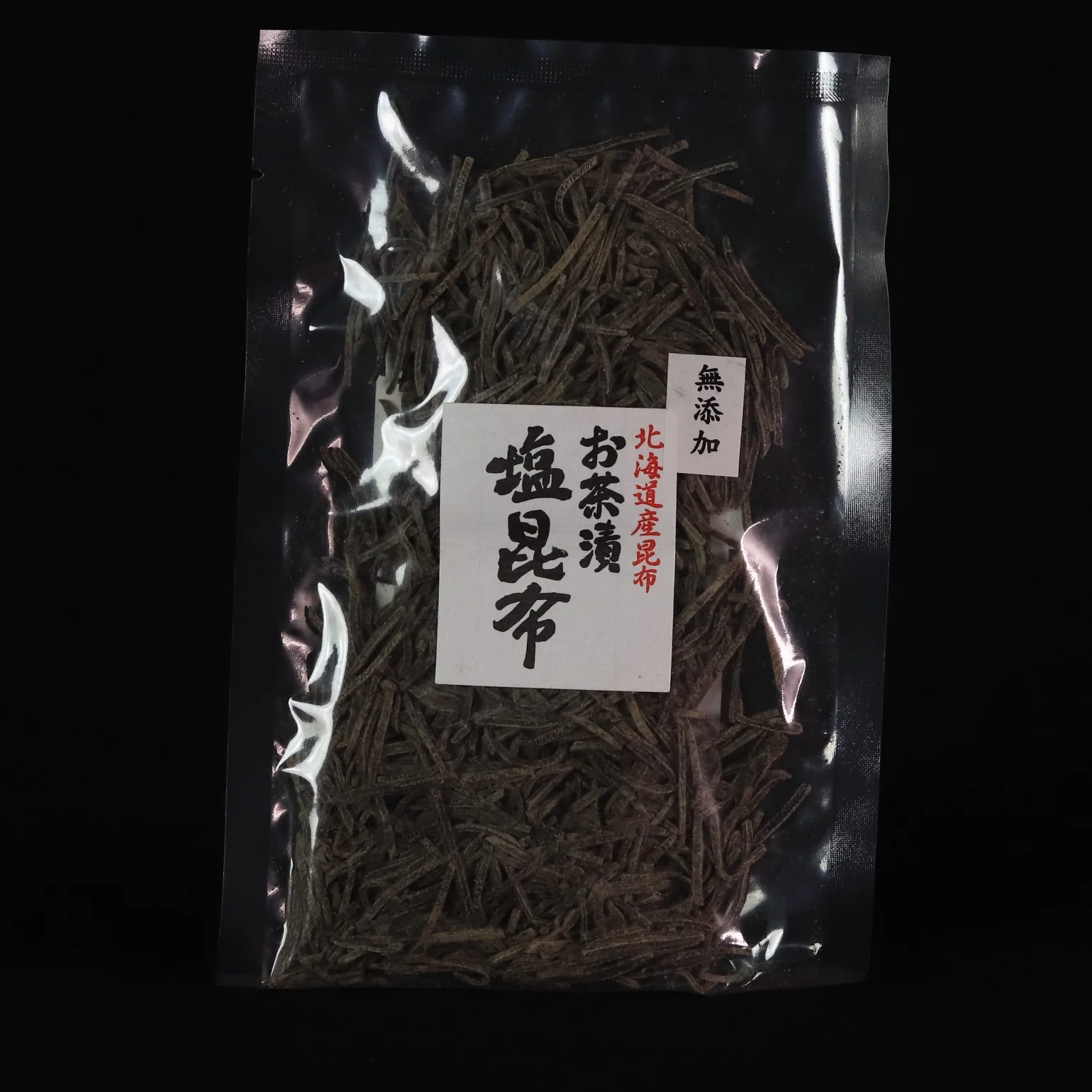
Kōmi, Salted Kombu (Shio-Kombu), Additive-Free, 50g
Shredded salted kelp, ready to lift a bowl of rice.
Shio-kombu is Hokkaido kelp simmered in soy and salt, then shredded and dried into soft, intensely savoury strands. This one is additive-free, so the deep, sweet umami of the kelp carries the flavour rather than seasoning. Ready to eat, straight from the pack. 50g.
More from the Kōmi kombu range: white kombu, ma kombu, A grade, classic kombu (1kg), 10-year aged white bay and 3-year aged black bay.
Why Operators Choose This
- Additive-free: no MSG or preservatives, just kelp, soy and salt.
- Intensity: a little carries deep umami across a whole dish.
- Ready to use: no prep, scatter straight from the pack.
- Hokkaido kelp: made from high-grade northern ma-kombu.
How to Use
- Classic: top ochazuke, green tea poured over rice.
- Onigiri: fold through warm rice for seasoned rice balls.
- Salad: toss with cabbage, cucumber and sesame oil for an izakaya-style side.
- Cross-cuisine: stir into pasta, butter or scrambled eggs for instant umami.
Shio-kombu (塩昆布, salt kelp) is kombu cut into fine strips and simmered slowly in soy sauce and salt until it soaks up the seasoning, then dried. It is a tsukudani-style preserve, made to keep and to season. The kelp here is ma-kombu (真昆布, true kelp) from Hokkaido, regarded as the highest grade and the source of the clearest, sweetest umami. Additive-free, or mutenka (無添加), means nothing is added beyond the kelp and its seasoning.
Learn more: How To Make Onigiri Rice Balls
What does shio-kombu taste like?
Concentrated and deeply savoury, with a salty hit up front and a long, sweet umami behind it. The strands are soft and slightly chewy, not crisp, closer to a soft jerky than a dried sheet. A pinch is enough; it seasons a bowl of plain rice on its own and adds salt, depth and a marine note to anything it touches. Additive-free, the flavour reads as pure kelp rather than seasoning powder.
| Type | Shio-kombu 塩昆布 (salted kelp) |
| Brand | Kōmi |
| Key Feature | Additive-free (mutenka) |
| Origin | Japan (Hokkaido kelp) |
| Net Weight | 50g |
| Best Used As | Umami topping for rice and salads |
What is the difference between shio-kombu and dashi kombu?
Dashi kombu is a whole dried frond used to draw a stock, then usually removed. Shio-kombu is kombu already cooked in soy and salt, shredded soft and made to be eaten as it is. One is a stock ingredient, the other a finished seasoning and topping. You would not steep shio-kombu for dashi, and you would not scatter raw dashi kombu over rice; they do different jobs.
How do I use shio-kombu?
Use it sparingly, as a seasoning rather than a vegetable. Fold a pinch through warm rice for onigiri, top ochazuke, or massage it into thinly sliced cabbage or cucumber for a quick salt-and-umami salad. Beyond the Japanese table it lifts pasta, risotto, butter and eggs. Because it is already salty, season the rest of the dish lightly and let the shio-kombu do the work.
How should I store shio-kombu after opening?
Reseal the pack tightly and keep it in a cool, dry place away from direct light; refrigerate once opened for the best texture. The salt makes it a stable preserve, but moisture is the enemy, so use a dry spoon and press out the air when you reseal. Kept dry, the strands stay soft and the flavour holds well over time.
Original: $18.77
-65%$18.77
$6.57Kōmi, Salted Kombu (Shio-Kombu), Additive-Free, 50g
Shredded salted kelp, ready to lift a bowl of rice.
Shio-kombu is Hokkaido kelp simmered in soy and salt, then shredded and dried into soft, intensely savoury strands. This one is additive-free, so the deep, sweet umami of the kelp carries the flavour rather than seasoning. Ready to eat, straight from the pack. 50g.
More from the Kōmi kombu range: white kombu, ma kombu, A grade, classic kombu (1kg), 10-year aged white bay and 3-year aged black bay.
Why Operators Choose This
- Additive-free: no MSG or preservatives, just kelp, soy and salt.
- Intensity: a little carries deep umami across a whole dish.
- Ready to use: no prep, scatter straight from the pack.
- Hokkaido kelp: made from high-grade northern ma-kombu.
How to Use
- Classic: top ochazuke, green tea poured over rice.
- Onigiri: fold through warm rice for seasoned rice balls.
- Salad: toss with cabbage, cucumber and sesame oil for an izakaya-style side.
- Cross-cuisine: stir into pasta, butter or scrambled eggs for instant umami.
Shio-kombu (塩昆布, salt kelp) is kombu cut into fine strips and simmered slowly in soy sauce and salt until it soaks up the seasoning, then dried. It is a tsukudani-style preserve, made to keep and to season. The kelp here is ma-kombu (真昆布, true kelp) from Hokkaido, regarded as the highest grade and the source of the clearest, sweetest umami. Additive-free, or mutenka (無添加), means nothing is added beyond the kelp and its seasoning.
Learn more: How To Make Onigiri Rice Balls
What does shio-kombu taste like?
Concentrated and deeply savoury, with a salty hit up front and a long, sweet umami behind it. The strands are soft and slightly chewy, not crisp, closer to a soft jerky than a dried sheet. A pinch is enough; it seasons a bowl of plain rice on its own and adds salt, depth and a marine note to anything it touches. Additive-free, the flavour reads as pure kelp rather than seasoning powder.
| Type | Shio-kombu 塩昆布 (salted kelp) |
| Brand | Kōmi |
| Key Feature | Additive-free (mutenka) |
| Origin | Japan (Hokkaido kelp) |
| Net Weight | 50g |
| Best Used As | Umami topping for rice and salads |
What is the difference between shio-kombu and dashi kombu?
Dashi kombu is a whole dried frond used to draw a stock, then usually removed. Shio-kombu is kombu already cooked in soy and salt, shredded soft and made to be eaten as it is. One is a stock ingredient, the other a finished seasoning and topping. You would not steep shio-kombu for dashi, and you would not scatter raw dashi kombu over rice; they do different jobs.
How do I use shio-kombu?
Use it sparingly, as a seasoning rather than a vegetable. Fold a pinch through warm rice for onigiri, top ochazuke, or massage it into thinly sliced cabbage or cucumber for a quick salt-and-umami salad. Beyond the Japanese table it lifts pasta, risotto, butter and eggs. Because it is already salty, season the rest of the dish lightly and let the shio-kombu do the work.
How should I store shio-kombu after opening?
Reseal the pack tightly and keep it in a cool, dry place away from direct light; refrigerate once opened for the best texture. The salt makes it a stable preserve, but moisture is the enemy, so use a dry spoon and press out the air when you reseal. Kept dry, the strands stay soft and the flavour holds well over time.
Product Information
Product Information
Shipping & Returns
Shipping & Returns
Description
Shredded salted kelp, ready to lift a bowl of rice.
Shio-kombu is Hokkaido kelp simmered in soy and salt, then shredded and dried into soft, intensely savoury strands. This one is additive-free, so the deep, sweet umami of the kelp carries the flavour rather than seasoning. Ready to eat, straight from the pack. 50g.
More from the Kōmi kombu range: white kombu, ma kombu, A grade, classic kombu (1kg), 10-year aged white bay and 3-year aged black bay.
Why Operators Choose This
- Additive-free: no MSG or preservatives, just kelp, soy and salt.
- Intensity: a little carries deep umami across a whole dish.
- Ready to use: no prep, scatter straight from the pack.
- Hokkaido kelp: made from high-grade northern ma-kombu.
How to Use
- Classic: top ochazuke, green tea poured over rice.
- Onigiri: fold through warm rice for seasoned rice balls.
- Salad: toss with cabbage, cucumber and sesame oil for an izakaya-style side.
- Cross-cuisine: stir into pasta, butter or scrambled eggs for instant umami.
Shio-kombu (塩昆布, salt kelp) is kombu cut into fine strips and simmered slowly in soy sauce and salt until it soaks up the seasoning, then dried. It is a tsukudani-style preserve, made to keep and to season. The kelp here is ma-kombu (真昆布, true kelp) from Hokkaido, regarded as the highest grade and the source of the clearest, sweetest umami. Additive-free, or mutenka (無添加), means nothing is added beyond the kelp and its seasoning.
Learn more: How To Make Onigiri Rice Balls
What does shio-kombu taste like?
Concentrated and deeply savoury, with a salty hit up front and a long, sweet umami behind it. The strands are soft and slightly chewy, not crisp, closer to a soft jerky than a dried sheet. A pinch is enough; it seasons a bowl of plain rice on its own and adds salt, depth and a marine note to anything it touches. Additive-free, the flavour reads as pure kelp rather than seasoning powder.
| Type | Shio-kombu 塩昆布 (salted kelp) |
| Brand | Kōmi |
| Key Feature | Additive-free (mutenka) |
| Origin | Japan (Hokkaido kelp) |
| Net Weight | 50g |
| Best Used As | Umami topping for rice and salads |
What is the difference between shio-kombu and dashi kombu?
Dashi kombu is a whole dried frond used to draw a stock, then usually removed. Shio-kombu is kombu already cooked in soy and salt, shredded soft and made to be eaten as it is. One is a stock ingredient, the other a finished seasoning and topping. You would not steep shio-kombu for dashi, and you would not scatter raw dashi kombu over rice; they do different jobs.
How do I use shio-kombu?
Use it sparingly, as a seasoning rather than a vegetable. Fold a pinch through warm rice for onigiri, top ochazuke, or massage it into thinly sliced cabbage or cucumber for a quick salt-and-umami salad. Beyond the Japanese table it lifts pasta, risotto, butter and eggs. Because it is already salty, season the rest of the dish lightly and let the shio-kombu do the work.
How should I store shio-kombu after opening?
Reseal the pack tightly and keep it in a cool, dry place away from direct light; refrigerate once opened for the best texture. The salt makes it a stable preserve, but moisture is the enemy, so use a dry spoon and press out the air when you reseal. Kept dry, the strands stay soft and the flavour holds well over time.