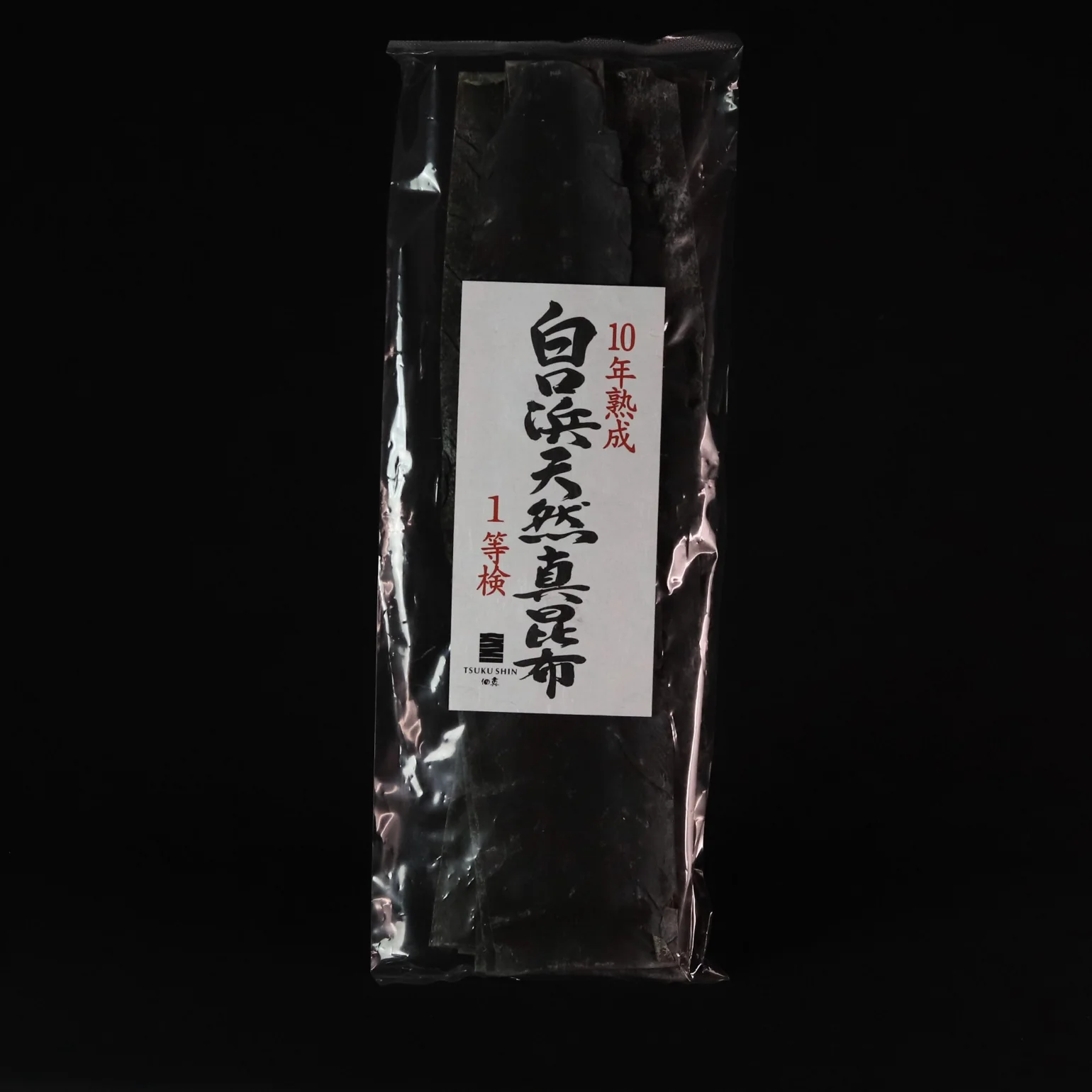
Kōmi, Ma Kombu, 10-Year Aged White Bay (Shiroikuchihama), 500g
Decade-aged wild kombu from Hakodate's most prestigious shore.
Ma kombu (真昆布) is the benchmark kelp of Japanese cooking, and this sits at the top of it. Tsuku Shin's Shiroikuchihama ma kombu is wild-harvested from one of the three elite kombu shores at Hakodate, graded 1-tōken, then aged a full decade. The ageing rounds off the raw marine edge and concentrates the umami, giving a dashi of rare clarity. 500g.
More from the Kōmi kombu range: ma kombu, A grade, 3-year aged black bay, classic kombu (1kg), white kombu and salted shio-kombu.
Why Chefs Choose This
- Shiroikuchihama origin: one of three named shores in Hakodate's elite kombu district, prized for the clearest, most elegant dashi.
- 10-year ageing: a decade in controlled storage concentrates glutamate and mellows the raw seaweed note.
- Grade 1 inspected: 1-tōken, the top class under Japan's kombu grading for thickness, colour and width.
- Wild-harvested: tennen, not farmed; wild ma kombu grows denser in the Tsugaru Strait currents.
How to Use
- Ichiban dashi: cold-soak a 10cm piece in 1L water for 30 to 60 minutes, then heat to just below boiling and lift out.
- Kaiseki dishes: suimono, chawanmushi and shabu-shabu broth, anywhere the dashi is the star.
- Niban dashi: re-simmer the used kombu with bonito for a robust second stock.
- Kombu-jime: press sashimi-grade fish between sheets for a few hours; the aged glutamates transfer readily.
Ma kombu (真昆布, true kelp) is the highest-grade Japanese kelp, and the waters off Hakodate in southern Hokkaido are its most celebrated ground. Three named shores there, Shiroikuchihama, Kurokuchihama and Motomachihama, have been prized for centuries, with Shiroikuchihama valued for the clearest, most refined dashi. It was in a bowl of kombu dashi that the chemist Kikunae Ikeda first isolated glutamate in 1908 and named the fifth taste, umami. This kombu is that taste at its most concentrated.
Learn more: Kombu Dashi (Kelp Stock)
Why does aged kombu make better dashi?
Fresh-season kombu makes good dashi, but it holds more moisture and a stronger raw marine character. Over a decade of controlled ageing, the moisture drops, the glutamate concentrates, and the volatile compounds behind harsh seaweedy notes fade. The result is a stock that is cleaner on the palate, richer in umami and more transparent in colour. It is the same principle as ageing cheese or dry-ageing beef: time removes what you do not want and concentrates what you do. In Kyoto's kaiseki tradition, aged ma kombu from Hakodate's named shores is treated as essential, not optional.
| Type | Ma kombu 真昆布 (true kelp) |
| Producer | つく新 Tsuku Shin |
| Harvest Area | 白口浜 Shiroikuchihama, Hakodate, Hokkaido |
| Harvest Method | 天然 Tennen (wild-harvested) |
| Grade | 1等検 (Grade 1 inspected) |
| Ageing | 10 years |
| Net Weight | 500g |
| Best Used As | Premium clear dashi |
What is Shiroikuchihama kombu?
Shiroikuchihama (白口浜) is one of three named kombu shores in the Hakodate region of southern Hokkaido, alongside Kurokuchihama and Motomachihama. These shores have been recognised for centuries as producing Japan's finest ma kombu. Shiroikuchihama kombu is especially valued for a clear, elegant dashi with refined umami and no cloudiness, which is why it became the preferred kombu of Kyoto's kaiseki cuisine, where the clarity of the stock matters as much as the flavour.
What is the difference between wild and farmed kombu?
Wild kombu (天然, tennen) grows naturally on the seabed, anchored to rock in tidal currents, developing over two or more years as it competes for nutrients and withstands the ocean. Farmed kombu (養殖, yoshoku) is grown on ropes and usually harvested after one year. Wild kombu is thicker, denser and richer in glutamate, so it gives a more complex, layered dashi. The tennen designation here confirms it is wild-harvested, not cultivated.
How is kombu graded in Japan?
Japanese kombu is graded by official inspectors on thickness, width, colour, moisture and the absence of damage. Grade 1 (1等検) is the highest class, meeting the top standard across every criterion. Lower grades remain usable but may be thinner, narrower or carry cosmetic marks. For dashi-led cooking where quality is the point, Grade 1 is the professional standard.
Original: $274.82
-65%$274.82
$96.19Kōmi, Ma Kombu, 10-Year Aged White Bay (Shiroikuchihama), 500g
Decade-aged wild kombu from Hakodate's most prestigious shore.
Ma kombu (真昆布) is the benchmark kelp of Japanese cooking, and this sits at the top of it. Tsuku Shin's Shiroikuchihama ma kombu is wild-harvested from one of the three elite kombu shores at Hakodate, graded 1-tōken, then aged a full decade. The ageing rounds off the raw marine edge and concentrates the umami, giving a dashi of rare clarity. 500g.
More from the Kōmi kombu range: ma kombu, A grade, 3-year aged black bay, classic kombu (1kg), white kombu and salted shio-kombu.
Why Chefs Choose This
- Shiroikuchihama origin: one of three named shores in Hakodate's elite kombu district, prized for the clearest, most elegant dashi.
- 10-year ageing: a decade in controlled storage concentrates glutamate and mellows the raw seaweed note.
- Grade 1 inspected: 1-tōken, the top class under Japan's kombu grading for thickness, colour and width.
- Wild-harvested: tennen, not farmed; wild ma kombu grows denser in the Tsugaru Strait currents.
How to Use
- Ichiban dashi: cold-soak a 10cm piece in 1L water for 30 to 60 minutes, then heat to just below boiling and lift out.
- Kaiseki dishes: suimono, chawanmushi and shabu-shabu broth, anywhere the dashi is the star.
- Niban dashi: re-simmer the used kombu with bonito for a robust second stock.
- Kombu-jime: press sashimi-grade fish between sheets for a few hours; the aged glutamates transfer readily.
Ma kombu (真昆布, true kelp) is the highest-grade Japanese kelp, and the waters off Hakodate in southern Hokkaido are its most celebrated ground. Three named shores there, Shiroikuchihama, Kurokuchihama and Motomachihama, have been prized for centuries, with Shiroikuchihama valued for the clearest, most refined dashi. It was in a bowl of kombu dashi that the chemist Kikunae Ikeda first isolated glutamate in 1908 and named the fifth taste, umami. This kombu is that taste at its most concentrated.
Learn more: Kombu Dashi (Kelp Stock)
Why does aged kombu make better dashi?
Fresh-season kombu makes good dashi, but it holds more moisture and a stronger raw marine character. Over a decade of controlled ageing, the moisture drops, the glutamate concentrates, and the volatile compounds behind harsh seaweedy notes fade. The result is a stock that is cleaner on the palate, richer in umami and more transparent in colour. It is the same principle as ageing cheese or dry-ageing beef: time removes what you do not want and concentrates what you do. In Kyoto's kaiseki tradition, aged ma kombu from Hakodate's named shores is treated as essential, not optional.
| Type | Ma kombu 真昆布 (true kelp) |
| Producer | つく新 Tsuku Shin |
| Harvest Area | 白口浜 Shiroikuchihama, Hakodate, Hokkaido |
| Harvest Method | 天然 Tennen (wild-harvested) |
| Grade | 1等検 (Grade 1 inspected) |
| Ageing | 10 years |
| Net Weight | 500g |
| Best Used As | Premium clear dashi |
What is Shiroikuchihama kombu?
Shiroikuchihama (白口浜) is one of three named kombu shores in the Hakodate region of southern Hokkaido, alongside Kurokuchihama and Motomachihama. These shores have been recognised for centuries as producing Japan's finest ma kombu. Shiroikuchihama kombu is especially valued for a clear, elegant dashi with refined umami and no cloudiness, which is why it became the preferred kombu of Kyoto's kaiseki cuisine, where the clarity of the stock matters as much as the flavour.
What is the difference between wild and farmed kombu?
Wild kombu (天然, tennen) grows naturally on the seabed, anchored to rock in tidal currents, developing over two or more years as it competes for nutrients and withstands the ocean. Farmed kombu (養殖, yoshoku) is grown on ropes and usually harvested after one year. Wild kombu is thicker, denser and richer in glutamate, so it gives a more complex, layered dashi. The tennen designation here confirms it is wild-harvested, not cultivated.
How is kombu graded in Japan?
Japanese kombu is graded by official inspectors on thickness, width, colour, moisture and the absence of damage. Grade 1 (1等検) is the highest class, meeting the top standard across every criterion. Lower grades remain usable but may be thinner, narrower or carry cosmetic marks. For dashi-led cooking where quality is the point, Grade 1 is the professional standard.
Product Information
Product Information
Shipping & Returns
Shipping & Returns
Description
Decade-aged wild kombu from Hakodate's most prestigious shore.
Ma kombu (真昆布) is the benchmark kelp of Japanese cooking, and this sits at the top of it. Tsuku Shin's Shiroikuchihama ma kombu is wild-harvested from one of the three elite kombu shores at Hakodate, graded 1-tōken, then aged a full decade. The ageing rounds off the raw marine edge and concentrates the umami, giving a dashi of rare clarity. 500g.
More from the Kōmi kombu range: ma kombu, A grade, 3-year aged black bay, classic kombu (1kg), white kombu and salted shio-kombu.
Why Chefs Choose This
- Shiroikuchihama origin: one of three named shores in Hakodate's elite kombu district, prized for the clearest, most elegant dashi.
- 10-year ageing: a decade in controlled storage concentrates glutamate and mellows the raw seaweed note.
- Grade 1 inspected: 1-tōken, the top class under Japan's kombu grading for thickness, colour and width.
- Wild-harvested: tennen, not farmed; wild ma kombu grows denser in the Tsugaru Strait currents.
How to Use
- Ichiban dashi: cold-soak a 10cm piece in 1L water for 30 to 60 minutes, then heat to just below boiling and lift out.
- Kaiseki dishes: suimono, chawanmushi and shabu-shabu broth, anywhere the dashi is the star.
- Niban dashi: re-simmer the used kombu with bonito for a robust second stock.
- Kombu-jime: press sashimi-grade fish between sheets for a few hours; the aged glutamates transfer readily.
Ma kombu (真昆布, true kelp) is the highest-grade Japanese kelp, and the waters off Hakodate in southern Hokkaido are its most celebrated ground. Three named shores there, Shiroikuchihama, Kurokuchihama and Motomachihama, have been prized for centuries, with Shiroikuchihama valued for the clearest, most refined dashi. It was in a bowl of kombu dashi that the chemist Kikunae Ikeda first isolated glutamate in 1908 and named the fifth taste, umami. This kombu is that taste at its most concentrated.
Learn more: Kombu Dashi (Kelp Stock)
Why does aged kombu make better dashi?
Fresh-season kombu makes good dashi, but it holds more moisture and a stronger raw marine character. Over a decade of controlled ageing, the moisture drops, the glutamate concentrates, and the volatile compounds behind harsh seaweedy notes fade. The result is a stock that is cleaner on the palate, richer in umami and more transparent in colour. It is the same principle as ageing cheese or dry-ageing beef: time removes what you do not want and concentrates what you do. In Kyoto's kaiseki tradition, aged ma kombu from Hakodate's named shores is treated as essential, not optional.
| Type | Ma kombu 真昆布 (true kelp) |
| Producer | つく新 Tsuku Shin |
| Harvest Area | 白口浜 Shiroikuchihama, Hakodate, Hokkaido |
| Harvest Method | 天然 Tennen (wild-harvested) |
| Grade | 1等検 (Grade 1 inspected) |
| Ageing | 10 years |
| Net Weight | 500g |
| Best Used As | Premium clear dashi |
What is Shiroikuchihama kombu?
Shiroikuchihama (白口浜) is one of three named kombu shores in the Hakodate region of southern Hokkaido, alongside Kurokuchihama and Motomachihama. These shores have been recognised for centuries as producing Japan's finest ma kombu. Shiroikuchihama kombu is especially valued for a clear, elegant dashi with refined umami and no cloudiness, which is why it became the preferred kombu of Kyoto's kaiseki cuisine, where the clarity of the stock matters as much as the flavour.
What is the difference between wild and farmed kombu?
Wild kombu (天然, tennen) grows naturally on the seabed, anchored to rock in tidal currents, developing over two or more years as it competes for nutrients and withstands the ocean. Farmed kombu (養殖, yoshoku) is grown on ropes and usually harvested after one year. Wild kombu is thicker, denser and richer in glutamate, so it gives a more complex, layered dashi. The tennen designation here confirms it is wild-harvested, not cultivated.
How is kombu graded in Japan?
Japanese kombu is graded by official inspectors on thickness, width, colour, moisture and the absence of damage. Grade 1 (1等検) is the highest class, meeting the top standard across every criterion. Lower grades remain usable but may be thinner, narrower or carry cosmetic marks. For dashi-led cooking where quality is the point, Grade 1 is the professional standard.